 EN

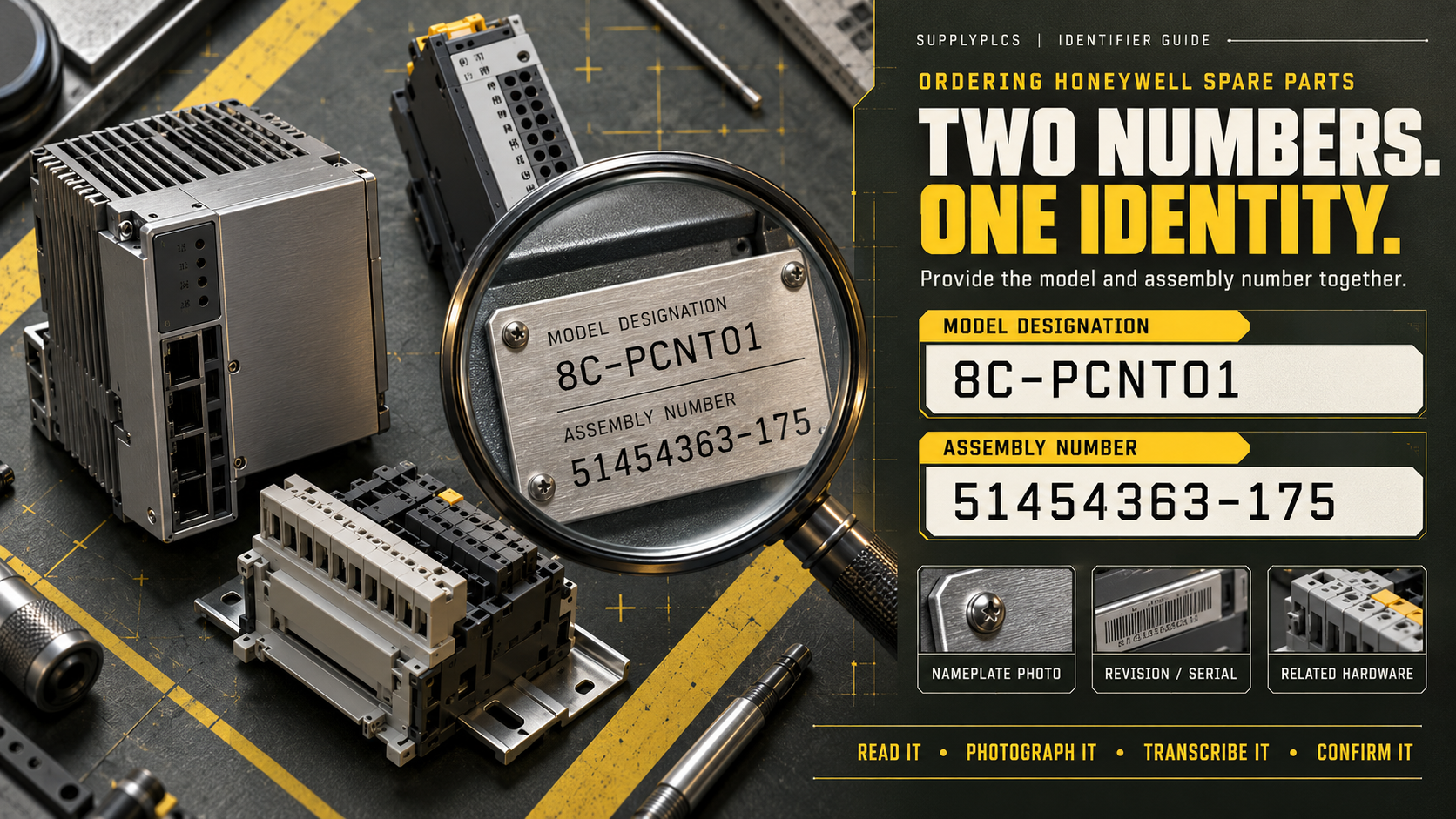
A Honeywell spare is rarely identified by a single number. Listings, nameplates, and purchase records commonly show a model designation alongside a longer assembly number, and both are part of what the item is. When a buyer supplies only one of them, the supplier is left to infer the rest, and inference is where mistakes begin. Getting the Honeywell model assembly part number pair right is among the simplest and most effective steps a buyer can take.
This article is for industrial automation engineers, maintenance planners, and procurement specialists who must request a Honeywell spare. It explains why two numbers matter, what each one tends to represent, how to read them from the nameplate, and how to present them in an inquiry. It does not claim that any item will fit or function in a particular system. A Honeywell model assembly part number request is strongest when both numbers and clear photographs travel together.
Nothing here is a statement about parameters, certification, inventory, lead time, or service. Any conclusion about suitability must come from the complete ordering information, the nameplate, the system documentation, and the relevant manufacturer manuals.
Why Two Numbers Are Better Than One
Manufacturers often describe a product with a short model designation that identifies the product type, and a longer number that identifies the specific assembly. The short designation is convenient for conversation; the longer number is what pins an order down. A buyer who quotes only the designation is describing a category, while a buyer who quotes the full Honeywell model assembly part number is describing an item. That difference becomes decisive when several variants share a family name.
The two numbers also serve different audiences. People speak in model names, while systems, drawings, and bills of material often work from the longer assembly number. Providing both removes ambiguity and lets each party match the record they actually hold. When a Honeywell model assembly part number is supplied in full, a supplier can compare it against the listing in front of them instead of guessing which variant is intended.
There is a practical consequence for the buyer as well. Writing both numbers forces a second look at the nameplate, and that second look is where transcription errors are caught. The habit of capturing a Honeywell model assembly part number deliberately — rather than copying whichever string is nearest to hand — pays for itself the first time it prevents an order for the wrong variant.
What Each Number Represents
A typical product listing illustrates the pattern. It shows a model designation followed by a longer numeric assembly number, and it may also list related items that carry their own numbers, such as a termination assembly or an interconnecting cable. The lesson is not the specific values but the structure: there is a name and there is a number, and they are not interchangeable. Reading a Honeywell model assembly part number means treating both halves as required fields.

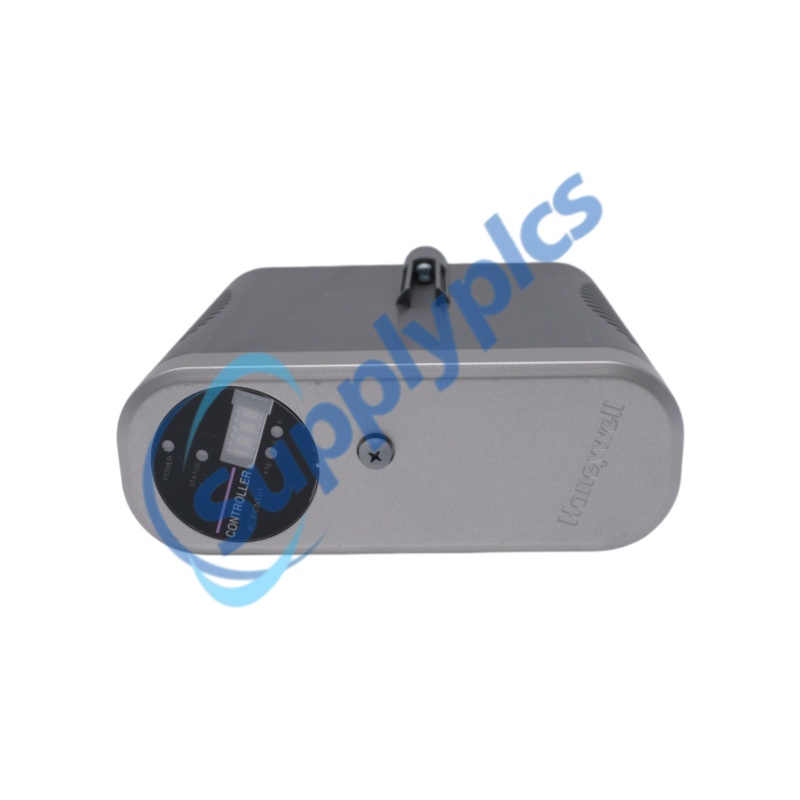
Consider a controller module listed as model 8C-PCNT01 together with assembly number 51454363-175. The first string tells you which product it is; the second tells you which build. A related termination assembly, in turn, is identified by its own designation and number. The same structure recurs across the range, and it is the reason a request that quotes only the model designation can be read in more than one way. Supplying a complete Honeywell model assembly part number closes that gap before it opens.
It also helps to recognise that the numbers around a spare are not all of the same kind. Some identify the main module; others identify hardware that accompanies it. When a buyer is collecting a Honeywell model assembly part number, the collection is not complete until the identifiers of any associated items are recorded as well. That is a small amount of extra work with a disproportionate effect on clarity.
Reading the Numbers Off the Nameplate
The nameplate is the primary source, and it should be treated as the record that travels with the item. Photograph it in good light, straight on, with the whole label visible, and then transcribe the fields into text so they can be pasted into an email. A photograph lets the reader verify what was written, and a transcription lets the reader search and compare. Together they turn a Honeywell model assembly part number into something a supplier can work with rather than squint at.
Capture the fields consistently: manufacturer and product family, model designation, assembly or part number, any revision or issue marking, the serial number, and any additional stamps or tags applied after manufacture. Where a label is partly illegible, say so rather than reconstructing it from memory. The aim is a faithful record, not a tidy one, because a tidied Honeywell model assembly part number is no longer a record of anything.
Where the nameplate cannot be read at all, the original documentation, a bill of material, or a commissioning record may still carry the numbers. Those sources are useful, but they should be treated as references to be verified against the hardware rather than as replacements for it. If the documentation and the nameplate disagree, record the disagreement; do not quietly choose the more convenient Honeywell model assembly part number.
Anonymous Scenario Example
Illustrative anonymous scenario, not a Supplyplcs customer project.
In October 2023, an engineer at an anonymous process plant in Bangkok, Thailand, prepared a spare parts inquiry for a Honeywell control module. The cabinet had been serviced several times over the years, and the documentation on site described a different variant from the one physically installed. The engineer's first instinct was to quote the family name from memory, which would have described a category rather than the item.
Instead, the engineer photographed the nameplate, transcribed both the model designation and the longer number, and recorded the revision marking as well. The inquiry was rebuilt around that pair, with the photographs attached. When the reply came back, the supplier was able to confirm which identifiers they were working from and to point out a field that the engineer had transcribed incorrectly.
The lesson was not about any particular supplier or product. It was that a complete Honeywell model assembly part number, verified against the hardware rather than recalled from a filing cabinet, changed the conversation from a guess into a check. The engineer later noted that the extra ten minutes spent reading the label were the most valuable part of the whole exercise, and that a partial Honeywell model assembly part number would have left the outcome to chance.
Assemblies, Carriers, and Related Hardware
Spare parts rarely travel alone. A request for a module may need to mention the assembly it sits on, the carrier or mounting hardware that holds it, and the cables that connect it. Each of those items has its own identifier, and each should be recorded when the goal is a complete picture. A Honeywell model assembly part number for the main module is the anchor, but it is not the whole inventory of what the request describes.
When associated hardware is omitted from an inquiry, the supplier has to ask for it, which costs a round trip and delays the buyer. Including it up front is a matter of listing, not of research, because the information is usually already in the same documentation. A request built around a Honeywell model assembly part number plus the identifiers of related hardware is easier to answer and easier to audit later.
It is worth being explicit about which item is the subject of the request. If the buyer intends to replace a module, the module's numbers lead; if the buyer intends to replace the assembly that carries it, that assembly's numbers lead. Confusing the two produces a request in which the Honeywell model assembly part number points at one item while the description points at another.
A Checklist Before You Send an Inquiry
Work through the following and record each answer before you write to anyone:
- Identify the exact item you intend to request.
- Record the manufacturer and product family as printed.
- Record the short model designation from the nameplate.
- Record the longer assembly or part number from the nameplate.
- Record any revision or issue marking, exactly as printed.
- Record the serial number of the installed item.
- Photograph the nameplate straight on, with the whole label visible.
- Photograph the item itself, including connectors and markings.
- Note any post-manufacture stamps, tags, or plant labels.
- List the related hardware that the request should mention.
- Record the identifiers of that related hardware.
- Check the numbers against the original documentation.
- Note any disagreement between documentation and nameplate.
- State clearly what is confirmed and what remains unconfirmed.
Only when the pair is complete should the request be sent. If a field cannot be resolved, say so plainly rather than substituting a plausible value, because an invented Honeywell model assembly part number is worse than an acknowledged gap.
Working With a Spare Parts Supplier
Supplyplcs is an industrial automation spare parts supplier, described here only in that role; no claim is made about stock, price, condition, delivery, or service. A supplier can help locate an item, but confirming that the identifiers describe the right hardware remains the buyer's responsibility. A useful way to anchor a request is to include a reference to the listing itself, for example the Honeywell 8C-PCNT01 51454363-175 C300 Controller Module page, alongside the numbers you recorded. Browsing the wider Honeywell spare parts category can help you see how the family is organised, though your own nameplate remains the authority.
Present the two numbers as a pair, in the order they appear, and attach the photographs. Ask the supplier to confirm which Honeywell model assembly part number they are working from, and to state whether the item they offer corresponds to that pair. If the reply is a general assurance rather than a match expressed in terms of the numbers, treat it as incomplete and ask again.
It also helps to describe the context: which system the item serves, what position it occupies, and what the documentation says about it. That context lets a competent supplier flag a discrepancy early. A supplier willing to discuss a Honeywell model assembly part number field by field gives you something you can check, which is exactly what a documented purchase requires.
Conclusion
Ordering a Honeywell spare is a documentation exercise. The model designation and the assembly number are two halves of one identity, and a request that supplies only one of them asks the supplier to fill in the rest. Read both from the nameplate, capture the related hardware, and present the pair together with photographs.
There is no shortcut around the nameplate, and no catalog description that replaces it. Gather the identifiers, state clearly what is known and what is not, and ask precise questions. Handled that way, a Honeywell model assembly part number becomes the basis of a decision that can be reviewed rather than a detail that was assumed.