 EN
EN

Introduction
Legacy control systems have a habit of working quietly for years and then demanding attention all at once. A Series 90-30 rack that has run without complaint since commissioning can, in a single maintenance window, present three problems at the same time: a CPU that will not start, a power supply that is under suspicion, and an I/O module that no longer reports. When that happens, the difference between a calm week and a difficult month is whether anyone wrote down what was actually installed.
This article explains how to build a GE Series 90-30 spare parts list covering the three elements maintenance teams reach for first: the CPU, the power supply, and the I/O modules. It does not state what any particular part costs, how long it takes to obtain, or what condition it might be in, and it does not suggest that any part can be substituted for another, because those questions are settled by documentation and by the engineers who know the installation. What it does is set out a method for recording what sits in a rack, slot by slot, so that the resulting GE Series 90-30 spare parts list is accurate, complete, and useful to everyone who depends on it. A list built this way is worth far more than a folder of remembered part numbers, and it is the foundation of every later purchasing decision.
Why a Written Inventory Beats a Mental One
Most plants believe they know what is in their control cabinets. In practice, knowledge of a rack is spread across several people, and each of them holds a slightly different version. The electrician remembers the modules he replaced last year, the engineer remembers the configuration she downloaded, and the planner remembers the order that arrived late. None of those memories is wrong, and none of them is complete.
A written GE Series 90-30 spare parts list resolves that fragmentation. It gives one authoritative version of what is installed, and it does so in a form that can be checked rather than argued about. When a fault occurs at two in the morning, the person on call does not need to phone three colleagues; they need a document that says exactly which CPU, which supply, and which modules are in the rack.
Building the GE Series 90-30 spare parts list is also an opportunity to discover what is no longer true. Field modifications, swapped modules, and abandoned cables accumulate quietly over years of operation. Walking the rack with a clipboard and a camera is the only reliable way to find them, and it is the work that turns a general intention into a GE Series 90-30 spare parts list worth keeping.
Start With the Rack: Frames, Slots and Positions
Everything in the GE Series 90-30 spare parts list hangs from the physical structure of the rack. Before recording any part number, establish the frame, the number of slots, and the position of every installed item. Number the positions in a way that matches the hardware, and use that numbering consistently in every document that follows.
Photograph the rack as a whole, then photograph each slot closely enough that the module and its neighbours are identifiable. Note which positions are occupied, which are covered by blanks, and which are genuinely empty. A position count matters later, because an I/O module's identity is only half the story; where it sits is the other half.
Record the frame and mounting details as descriptive facts, without drawing conclusions about what the rack can accept. The purpose of this stage is to produce an accurate map, and an accurate map is what every entry in a GE Series 90-30 spare parts list ultimately refers back to.
The CPU: The Anchor of the List
The CPU is the first substantive entry, and it is the entry that everything else is organised around. Copy its complete order number from the marking on the unit, character for character, and compare that number with whatever appears in your system documentation. Where the two disagree, write down both and treat the difference as an open question rather than resolving it by preference.
Photograph the CPU nameplate in good, even light, and photograph the unit in place so that its position is visible. Note the firmware or project information that is available from the documentation, and note who holds the program and the configuration records. These details are not decoration; they are what makes an entry in a GE Series 90-30 spare parts list actionable when time is short.
Finally, record the role the controller plays. Is it the only CPU on the line, or one of several? Is the process critical, or can it be stopped at short notice? Context like this shapes how much planning the spare should receive, and it belongs beside the number in the same record.
Power Supplies: A Separate Line
Power supplies are frequently treated as an afterthought, yet they are the components most likely to age invisibly. Give the supply its own section of the document, with its own complete order number, its own photograph, and its own description of where it sits and what it feeds.
Note how the supply is configured within the rack, and note the visible condition of its connections and cooling path. These are descriptive observations, not measurements; a written description of what is visibly present is enough to make the entry useful, and any electrical assessment belongs to qualified personnel following the manuals.
Where more than one supply is present, list each one separately rather than grouping them. A GE Series 90-30 spare parts list that treats a single supply as representative of all of them will eventually mislead someone, and the cost of avoiding that is a few extra minutes of writing.
I/O Modules: Group by Function, Not by Habit
I/O modules are usually the largest section of the inventory, and the easiest to get wrong. Group them by the function they perform and the position they occupy, and record each one with its complete order number, its slot, and a photograph that shows both the module and its labelling.
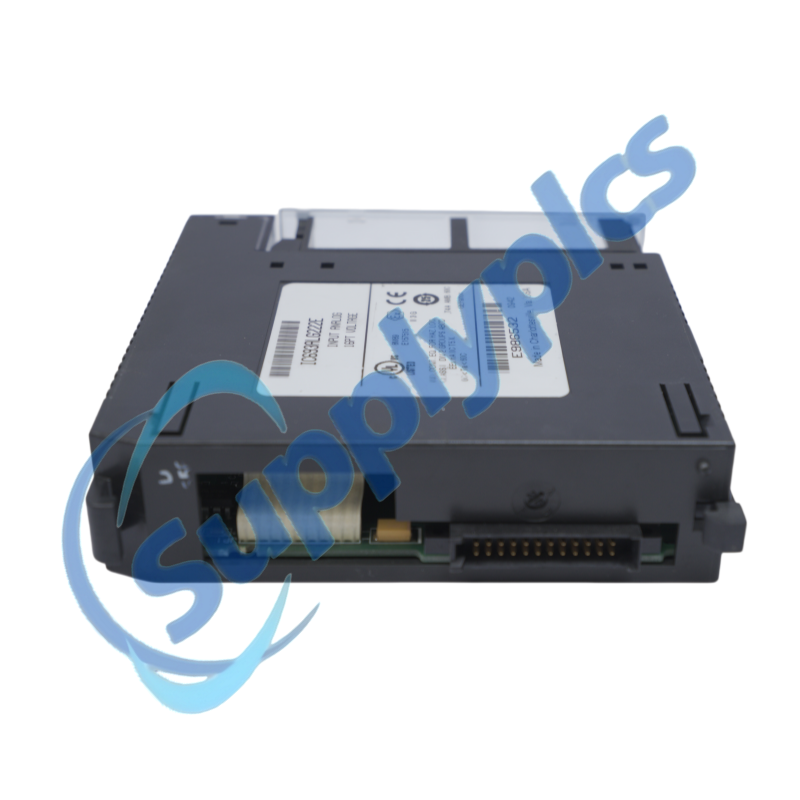
Resist the temptation to describe modules as "the usual input card" or "the same as slot four." Modules that look alike may carry different order numbers, and the differences are exactly what a GE Series 90-30 spare parts list exists to capture. Record what the marking says, not what the pattern suggests.
Note also the accessories that belong with each module: terminal blocks, connectors, and any cabling that serves the position. A module without its accessories is only part of an item, and the inventory should say so. Where a blank or filler occupies a slot, record that too, because an empty position is information in its own right.
Cables, Terminal Blocks and Accessories
Accessories are where inventories most often drift out of date. Cables are replaced, terminal blocks are swapped, and connectors are changed, and the paperwork rarely follows. Walk the cabinet and record what is physically present, using the markings you can see and photographing anything that carries an order number.
List each accessory beside the module it serves, and note the condition of the terminations as an observation rather than a judgement. If a cable carries a part number, record it; if it does not, describe it by function and position so that a reader can find it. A complete GE Series 90-30 spare parts list includes these items because they are the parts that get ordered alongside the modules, and because their absence is felt immediately when something fails.
From Notes to a Working List
Notes become a working GE Series 90-30 spare parts list when they are organised and stored where people can find them. Choose a single location for the file, give it a clear title, and keep the photographs with it rather than scattered across personal devices. A simple structure works best: one section per rack, one line per item, one number per line.
Add a date to the document and a note of who compiled it. Update it whenever a module is changed, and mark superseded versions rather than deleting them, so that the history of the rack remains visible. This discipline is what keeps a GE Series 90-30 spare parts list alive; a list that is never updated is worse than no list at all, because it invites misplaced confidence.
Where information is missing, say so explicitly. An entry that reads "order number not legible, photograph attached" is more useful than a confident guess, and it tells the next person where to start.
Anonymous Scenario Example
Illustrative anonymous scenario, not a Supplyplcs customer project.
In March 2024, a maintenance team at a food processing plant in Monterrey, Mexico, faced an unplanned stop on a packaging line built around a Series 90-30 control system. The line had been in service for many years, and the rack documentation had last been updated before the current maintenance staff arrived. When the CPU failed to start after a power interruption, the team could identify the CPU itself but had no reliable record of the power supply or of the I/O modules in the remaining slots.
Rather than ordering parts from memory, they walked the rack on the first morning of the stop. A technician photographed each slot, transcribed the order numbers from the nameplates, and listed the accessories attached to each position. Two modules turned out to carry numbers that differed from the old drawing, a discovery that would have caused a wrong order had the drawing been trusted. Within a day the team had a complete GE Series 90-30 spare parts list for the line, checked against the hardware and signed off by the plant engineer. No part had been ordered on a guess, and the list was filed for the next time the line needed attention.
A Building Checklist
Use the following checklist when compiling the inventory.
- Identify the rack, frame, and total number of slots.
- Number the slots in a way that matches the physical hardware.
- Photograph the whole rack, then each occupied position.
- Copy the CPU order number from the unit itself.
- Compare that number against the system documentation.
- Record the power supply order number and its position.
- List each I/O module with its number, slot, and function.
- Photograph every nameplate in sharp, even light.
- List the accessories attached to each module.
- Note blanks, fillers, and empty positions.
- Record visible condition as an observation, not a judgement.
- Note any field modification that differs from the drawings.
- State openly where information is missing or illegible.
- Date the document and record who compiled it.
Worked through once, these steps produce a GE Series 90-30 spare parts list that reflects the rack rather than the memory of it, and they leave a clear record of where the remaining uncertainties lie.
Working With a Spare Parts Supplier
Once the GE Series 90-30 spare parts list exists, it can be used. When you need pricing, take the entries for the items of interest and prepare a submission that includes the complete order numbers, the quantities, and clear photographs of the nameplates. Submit the full model number and photos of each item and its nameplate to request a quotation.
When you approach Supplyplcs, an industrial automation spare parts supplier, the quality of what you send determines the quality of what you receive. Supplyplcs is a spare parts supplier; it does not perform engineering assessments and does not decide which part suits your rack. Any question about condition, availability, or timing is confirmed through the quotation or the order itself, not assumed in advance.
A well-built GE Series 90-30 spare parts list turns that conversation into a short one. Instead of describing a card over the phone, you send a number and a photograph, and the enquiry becomes unambiguous. That is the practical reward for the work described above, and it is why the GE 90-30 Series PLC catalogue is easier to use when your own records are already in order.
Conclusion
A GE Series 90-30 spare parts list is not paperwork for its own sake. It is the difference between a maintenance team that reacts from memory and one that acts from facts. Building a GE Series 90-30 spare parts list means walking the rack, reading the nameplates, photographing what is there, and writing it down where others can find it.
Start with the rack, anchor the list on the CPU, give the power supply its own line, and treat every I/O module and accessory as a distinct entry. Keep the document dated and current, and record uncertainty honestly rather than hiding it behind a guess. Done properly, a GE Series 90-30 spare parts list prepares a plant for the moment when a quiet rack finally asks for help.
Table of Contents
- Introduction
- Why a Written Inventory Beats a Mental One
- Start With the Rack: Frames, Slots and Positions
- The CPU: The Anchor of the List
- Power Supplies: A Separate Line
- I/O Modules: Group by Function, Not by Habit
- Cables, Terminal Blocks and Accessories
- From Notes to a Working List
- Anonymous Scenario Example
- A Building Checklist
- Working With a Spare Parts Supplier
- Conclusion