 EN

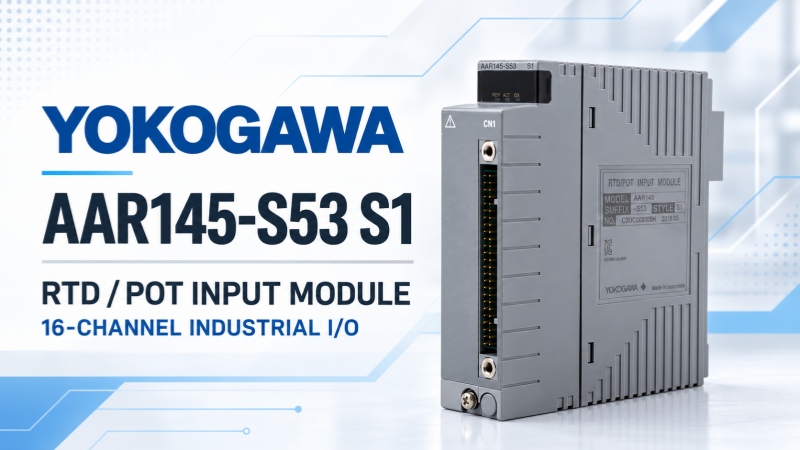
In the maintenance work of DCS systems such as Yokogawa CENTUM CS and CS3000, it is common for input modules to have similar appearances and similar model writing. If procurement personnel only place orders based on product images or series names and only discover inconsistent configurations after receiving the goods, it often affects the installation progress.
AAR145-S53 S1 is an input module used for RTD/PAT signal acquisition. It is commonly described as a 16 channel isolated input module, mainly used for temperature, resistance, and potentiometer signal acquisition. It usually appears in Yokogawa field control systems and FIO related applications.
What is the main purpose of AAR145-S53 S1
The AAR145 series is not an ordinary switch module, but is used for analog signal acquisition. RTD signals usually come from temperature sensors, while POT is related to resistive position or potentiometer signals. The module converts on-site input into data that can be recognized by the control system for monitoring, alarm, trend recording, and process control purposes.
In some factories with longer operating times, AAR145-S53 S1 may have been in use for many years. The equipment itself can still meet the on-site requirements, but due to system shutdown, reduced spare parts, or changes in the original supply channel, maintenance personnel need to reconfirm the model and substitution relationship.
Where is it easily confused with similar models
Firstly, it should be noted that AAR145-S53 S1 is not an identical product to AAR145-S50 S1, AAR145-S03 S1, and other AAR or AAT series modules. They may all belong to the temperature or resistance input range, but the specific input type, environmental level, coating requirements, system compatibility, and hardware configuration may vary.
Secondly, the letters and numbers in the model are not decorative markings. AAR145 represents the product line, and the following code is usually related to signal type, environmental conditions, or configuration options. The final S1 may also correspond to a specific structure or manufacturing version. The label writing for different batches may also vary, so we cannot just look at the previous "AAR145".
If the on-site system requires AAR145-S53 S1 and the procurement document only states "AAR145 input module", it may leave a significant margin of error. Suppliers may quote based on other similar models in inventory, ultimately leading to installation, configuration, or signal matching issues.
How to Check the Model Before Buying
The safest place to start is with the unit on site, not with a product photo found online.
First, take a clear photo of the nameplate.
The picture should show the model number, serial number, hardware revision and any Style marking. If the label is blurred or partly cut off, important characters can easily be misread.
Next, check the plant records.
Review the original BOM, cabinet drawings, I/O list and maintenance notes. These documents can show where the module is installed, which channels it serves and what sensors are connected.
Then confirm the signal type.
Make sure the site is using RTD, POT or another analog input type supported by the proposed module. Two units may have the same channel count and still not be interchangeable.
Check the control-system platform as well.
Confirm whether the module is used in CENTUM CS, CS3000 or another Yokogawa system. The related FIO node, baseplate and connection method should also be verified.
Finally, ask the supplier for photos of the actual unit.
The photos should show the front label, connectors, side profile and packaging label. For older or warehouse-stock modules, also ask about the product condition, hardware revision and any available test record.
Can a Replacement Model Be Used Directly?
A similar model cannot be approved as a replacement based on the product family name alone. Even when two modules have the same number of input channels, they may differ in sensor types, channel isolation, environmental specifications or configuration requirements.
If a supplier recommends a replacement for AAR145-S53 S1, the buyer should ask for the technical basis of the recommendation. It is also important to confirm whether the replacement requires changes to the engineering configuration, terminal wiring, baseplate or system software. For a critical production line, an offline review or site test is advisable before the final replacement is carried out.
Conclusion
The focus of model verification for AAR145-S53 S1 is not on finding a similar looking image, but on confirming complete ordering information, input signals, system platform, and installation location.
When purchasing, the physical nameplate, BOM, I/O list, on-site photos, and software configuration should be compared together. Only when these pieces of information can correspond, can we confidently determine whether the module is suitable for repair or replacement.
For the Yokogawa CENTUM system that is still running, organizing model information in advance and saving a confirmed spare part is usually more secure than temporarily searching for similar models after a malfunction occurs.
Our company has been established for over 20 years and maintains an extensive inventory; please feel free to contact us.
Sales manager:Jim Pei
Wechat: ZXH18020776782
Phone/WhatsApp:+86 18020776782