 EN

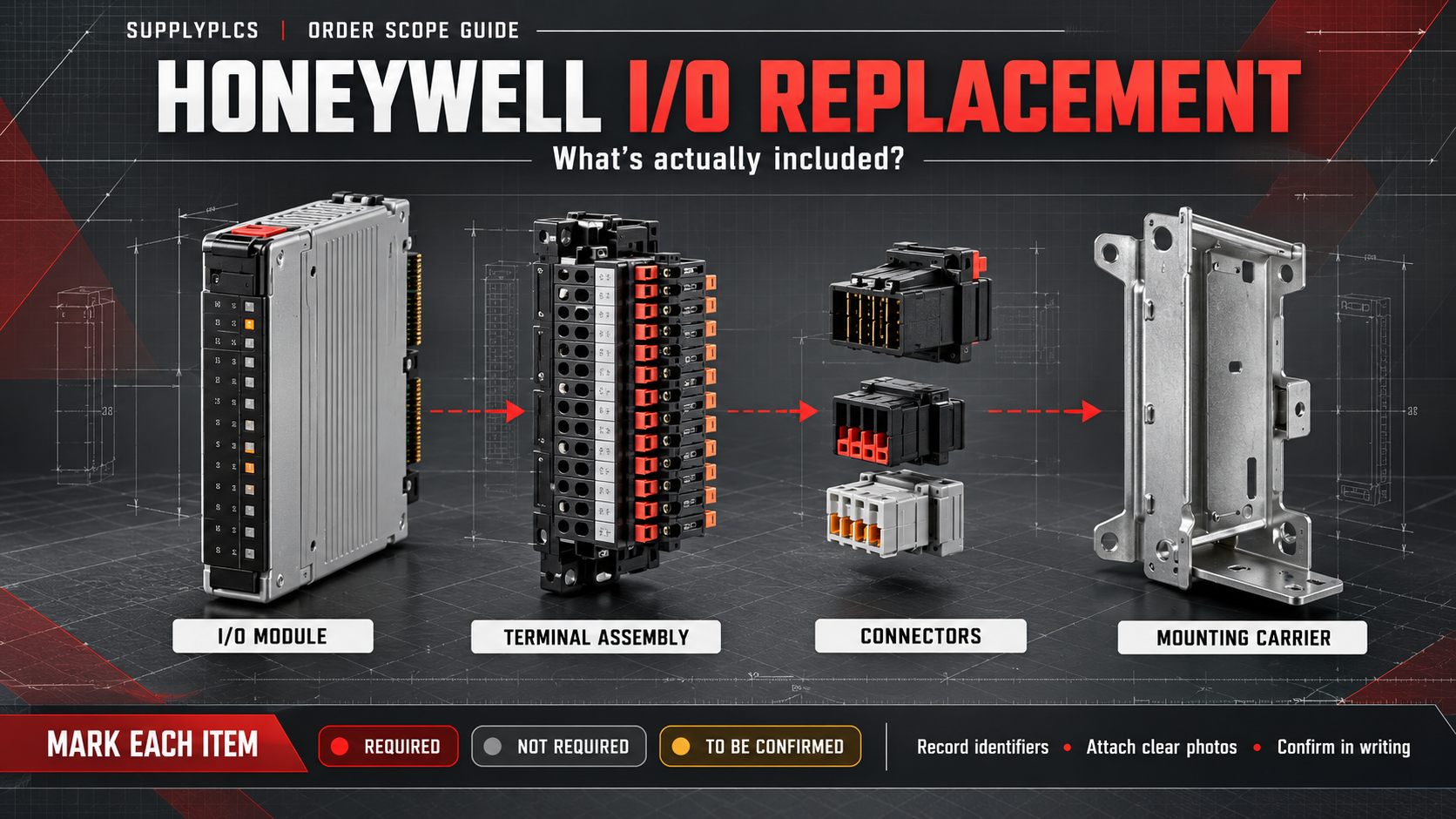
The word "replacement" hides a question that buyers and suppliers often answer differently. When someone orders a Honeywell I/O replacement, do they mean the module alone, the module with its terminal assembly, or the whole arrangement including connectors and the hardware that holds it? Until that question is settled, both sides may believe they agree while describing different things. Defining the Honeywell I/O terminal assembly connectors scope at the outset is what prevents that misunderstanding.
This article is for industrial automation engineers, maintenance planners, and procurement specialists who must define and approve an I/O replacement order. It explains why the scope of a replacement is ambiguous by default, what the scope must state explicitly, and how to present that scope in an inquiry. It does not claim that any item will fit or function in a particular system, and it does not state dimensions or ratings. A Honeywell I/O terminal assembly connectors question should be answered from the documentation, not from an assumption.
Nothing here is a statement about parameters, certification, inventory, lead time, or service. Any conclusion about scope must come from the ordering information, the nameplate, the system documentation, and the relevant manufacturer manuals.
Why "Replacement" Is Ambiguous in I/O Systems
An I/O position in a control system is not a single object. It usually involves a module, a terminal assembly or termination point to which field wiring lands, the connectors that join the two, and often a carrier or mounting structure that holds the assembly in place. A buyer who says "replace the I/O" may mean any subset of that arrangement. Clarifying the Honeywell I/O terminal assembly connectors scope is therefore the first task of the order, not a detail to settle later.
The ambiguity is compounded because the parts are physically and commercially distinct. They have separate identifiers, they may be ordered separately, and they may be described separately in a listing. If the scope is not written down, each party fills the gap with their own mental model. Writing out the Honeywell I/O terminal assembly connectors scope converts that private model into a shared one.
There is also an operational reason to be precise. A replacement that arrives without the connectors it needs cannot be installed, and a replacement that arrives with hardware the buyer already has may be more than was wanted. Neither outcome is a fault of the supplier; both are consequences of an unstated scope. A Honeywell I/O terminal assembly connectors definition protects both sides.
Terminal Assemblies and Connectors: What the Scope Must Define
The scope should name each element and state whether it is included, excluded, or to be confirmed. Typically this means the I/O module itself, the terminal assembly or termination assembly on which field wiring lands, the connectors that interface the module to that assembly, and any carrier or mounting hardware. Listing them separately is what makes a Honeywell I/O terminal assembly connectors scope checkable rather than impressionistic.

It is helpful to separate the electrical interface from the mechanical one. The connectors and terminal assembly belong to the electrical interface; a carrier or mounting structure belongs to the mechanical side. A buyer who conflates them may specify a Honeywell I/O terminal assembly connectors scope while overlooking the structure that holds everything in position, or the reverse. Naming both categories keeps the request whole.
Where an item is genuinely not needed, say so explicitly. "Module only; terminal assembly and connectors already on site" is a complete statement, and it is far more useful than silence. Where an item is uncertain, mark it as to be confirmed rather than omitting it, so that the Honeywell I/O terminal assembly connectors question is visible to both parties and can be closed deliberately.
Written scope also has a commercial benefit. When each element is listed, the inquiry can be answered against the list rather than against a general impression, and any element that cannot be supplied is identified at the inquiry stage instead of after an order is placed. A buyer who defines a Honeywell I/O terminal assembly connectors scope this way gives the supplier a fair chance to respond precisely, and gives themselves a document they can appeal to if the delivered items do not correspond to the agreed list. The same list becomes the reference point for the next replacement, so the effort of defining a Honeywell I/O terminal assembly connectors scope is repaid more than once.
Anonymous Scenario Example
Illustrative anonymous scenario, not a Supplyplcs customer project.
In June 2024, an anonymous maintenance planner in Jakarta, Indonesia, raised an order for an I/O replacement after a fault in a control cabinet. The planner described the requirement as replacing the affected I/O point, and the supplier understood that to mean the module. The planner, meanwhile, had been thinking of the module together with the terminal assembly and the connectors that join them.
The discrepancy surfaced only when the two descriptions were compared in writing. The planner then rebuilt the request as an explicit list: module, terminal assembly, connectors, and mounting hardware, each marked as required, not required, or to be confirmed. Photographs of the installed arrangement were attached, and the identifiers of each element were recorded from their labels.
The value of the exercise lay in the listing rather than the outcome. By converting a single vague word into an enumerated Honeywell I/O terminal assembly connectors scope, the planner removed the room in which the misunderstanding had grown. The episode also showed that a Honeywell I/O terminal assembly connectors question is best answered before the order, when it is cheap, rather than after delivery, when it is not.
Reading the Ordering Information
The identifiers for the module, the terminal assembly, and the connectors should be read from their labels and transcribed exactly. A model designation identifies a product; a longer number identifies a specific assembly, and the two should be recorded together rather than treated as alternatives. When the scope lists several elements, each needs its own Honeywell I/O terminal assembly connectors record so that a missing identifier is visible rather than assumed.
Photographs complement the transcription. A photograph of the installed arrangement shows how the module, the terminal assembly, the connectors, and any carrier sit together, which is often the clearest way to communicate scope to a supplier. Where a label is partly illegible, say so and photograph it as clearly as possible. A Honeywell I/O terminal assembly connectors scope supported by photographs is far easier to confirm than one supported only by prose.
It is also worth recording the position the I/O occupies and its role in the system, taken from the documentation. Position and role help a supplier understand why the scope was drawn as it was, and they give the buyer a way to check that the Honeywell I/O terminal assembly connectors list corresponds to the actual installation rather than to a generic template.
A Checklist for Defining Replacement Scope
Before sending an I/O replacement inquiry, work through the following:
- State the fault or reason for the replacement in neutral terms.
- Identify the I/O position and its role from the documentation.
- List the module and record its model designation and assembly number.
- List the terminal assembly and record its identifiers.
- List the connectors and record their identifiers.
- List any carrier or mounting hardware and record its identifiers.
- Mark each element as required, not required, or to be confirmed.
- Photograph the installed arrangement.
- Photograph each label clearly, with the whole label visible.
- Note any illegible label rather than reconstructing it.
- Compare the list with the system documentation.
- Record any discrepancy between the list and the documentation.
- Avoid inferring inclusion from an illustration or a photograph alone.
- State clearly what is confirmed and what remains open.
Only when every element has a status should the inquiry be sent. Leaving an element unmarked is the same as leaving the Honeywell I/O terminal assembly connectors scope undefined, and reopens the ambiguity the list was meant to remove.
Common Misunderstandings to Avoid
A few patterns account for most I/O scope disputes:
- Treating "I/O replacement" as self-explanatory when it is not.
- Assuming connectors are always included, or always excluded.
- Assuming a mounting carrier is part of the module order.
- Inferring scope from an illustration rather than from the documentation.
- Omitting an uncertain element instead of marking it to be confirmed.
- Comparing only the module and ignoring the surrounding arrangement.
Each misunderstanding has the same remedy: reduce the word "replacement" to an explicit list, mark every element, and confirm the Honeywell I/O terminal assembly connectors scope in writing before the order is placed. Clarity here is not pedantry; it is the difference between one conversation and several.
None of this requires special equipment or deep research. It requires only that the person raising the order slows down long enough to enumerate what the replacement comprises, mark each element honestly, and attach the evidence. That is a small discipline, but it is the one that decides whether the order is understood in the same way by everyone involved.
Working With a Spare Parts Supplier
Supplyplcs is an industrial automation spare parts supplier, described here only in that role; no claim is made about stock, price, condition, delivery, or service. A supplier can help locate items, but defining the scope remains the buyer's responsibility. A practical reference point for a request of this kind is a listing such as the Honeywell FC-MCAR-02 Mounting Carrier page, which shows how a single piece of the arrangement is described on its own.
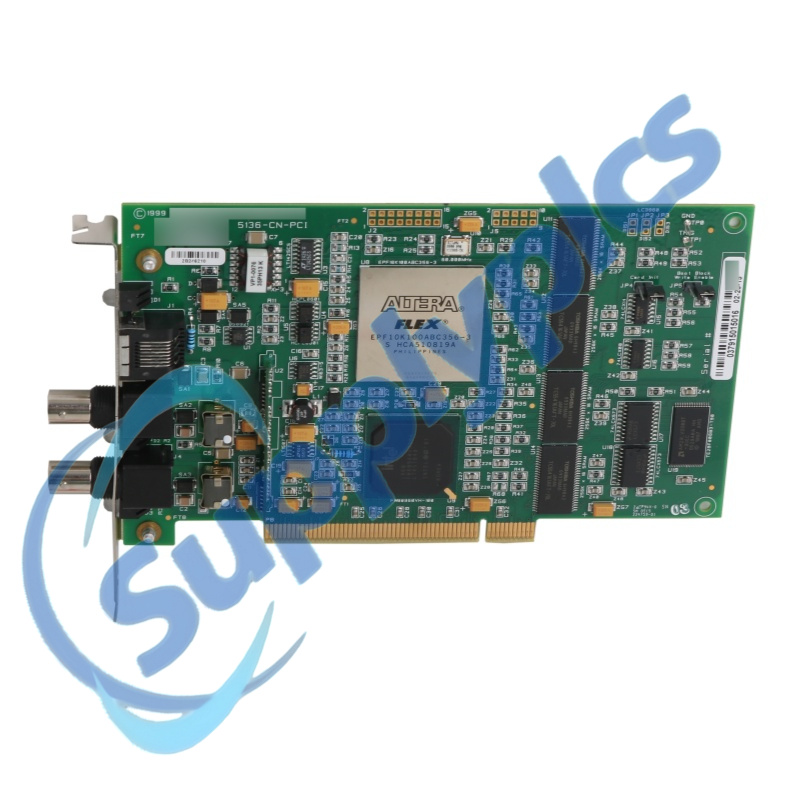
When you write, present the enumerated scope and ask the supplier to confirm it item by item. Ask which identifiers they are working from and whether each element of the Honeywell I/O terminal assembly connectors scope is being offered, excluded, or left to be confirmed. If the reply is a general assurance that the replacement is complete, ask for it to be restated against your list rather than in terms of confidence. The Honeywell DCS pages show how items like these sit within the wider range and can help you frame the question, though your own records still decide the answer.
A supplier willing to discuss a Honeywell I/O terminal assembly connectors scope line by line gives you something you can verify. Treat the reply as one input among several, read it against your own records, and keep the exchange with the purchase file so the reasoning survives.
Conclusion
The question in the title has no universal answer, because "replacement" means whatever the scope says it means. The task for the buyer is to make that meaning explicit: an enumerated list of module, terminal assembly, connectors, and mounting hardware, each marked required, not required, or to be confirmed, supported by photographs and identifiers read from the labels.
No article or supplier summary can supply that definition for you, and no illustration removes the need for it. Reduce the word to a list, confirm the Honeywell I/O terminal assembly connectors scope in writing, and state clearly what is confirmed and what remains open. That is what turns a vague replacement order into one both sides understand in the same way.