 EN
EN

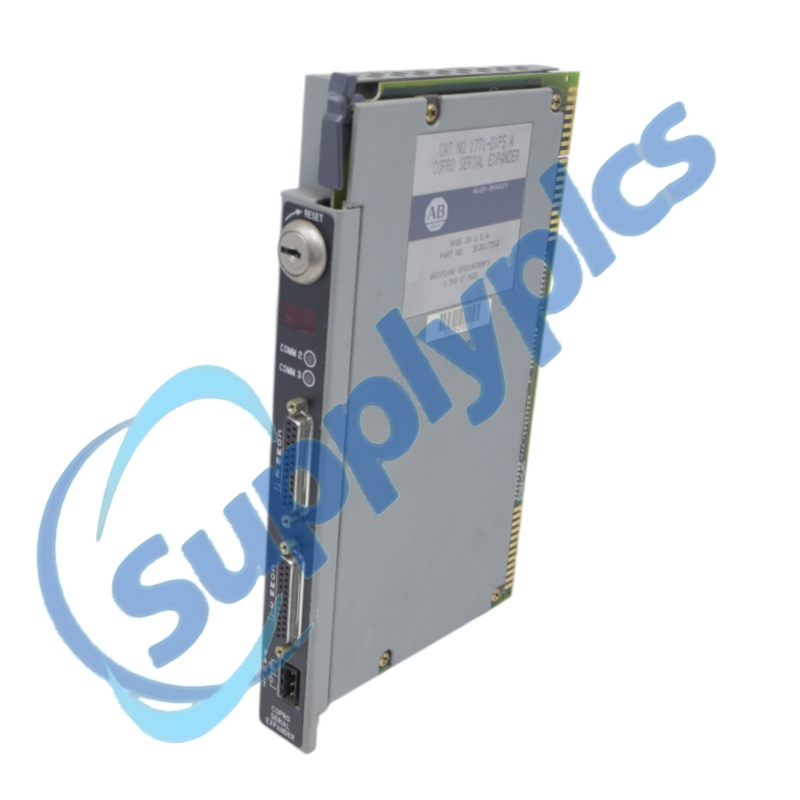
When a legacy ABB Contronic control system stops, the fastest route back to production often runs through an independent spare parts supplier rather than the original purchase file. That reality puts pressure on the engineer or buyer who must identify hardware from a partial model string, a faded label, or a hurried photograph. The tempting assumption is that any module with a similar faceplate will drop in and work. In practice, ABB Contronic replacement modules must be matched against specific nameplate fields, ordering codes, and hardware revision levels before anyone can responsibly claim that two items are interchangeable.
This guide is written for industrial automation engineers, maintenance planners, and procurement specialists who specify or approve legacy spares. It contains no cross-reference table and does not claim that one version substitutes for another. Instead, it explains which details matter, why revision numbers cannot be dismissed, and how to structure an inquiry so that supplier and buyer reach the same conclusion before an order is placed.
Nothing here is a statement about performance, certification, inventory, price, or lead time. Any statement about fit is meaningful only when confirmed against the complete ordering number, the physical nameplate, the original system documentation, and the relevant manufacturer manuals.

Why Nameplate Matching Comes Before Anything Else
Legacy automation hardware ages in ways no document fully anticipates. Modules get swapped during emergency repairs, cabinets are rebuilt, retrofits are stacked on earlier retrofits, and paperwork drifts away from the equipment. By the time a failure occurs, the most reliable identifier is usually the device itself. Disciplined teams therefore photograph the nameplate before a module leaves the cabinet.
A nameplate is the manufacturer's own record of what that unit was built to be. Two boards that look identical from the front, share a connector layout, and even carry the same family name can differ in ways only the nameplate and the revision marking reveal. When buyers order by appearance, they create the conditions for a second failure and an unnecessary return. For teams sourcing ABB Contronic replacement modules, the nameplate is the starting point, not an afterthought.
Describe the item the way the manufacturer described it, not the way a catalog page abbreviates it. A short model string is rarely enough to confirm that a board will behave as the system expects. ABB Contronic replacement modules demand the precision the original purchase order once had.
The Nameplate Fields You Must Capture
Photograph the label in good light, then transcribe the fields into text so they can be pasted into an email. Pay attention to:
- Manufacturer and product family, exactly as printed.
- Full type or model designation, including every suffix and separator character.
- Complete ordering number or order code, not a shortened nickname.
- Hardware revision, revision index, or issue number, including any letter or digit following the base type.
- Serial number, which uniquely identifies the individual unit.
- Rated supply voltages and signal ranges, as printed, without interpretation.
- Certification marks and approval identifiers, exactly as shown.
- Manufacturing date or date code, if present.
- Any extra stamps, stickers, or hand-marked revisions applied after manufacture.
Two fields deserve emphasis. The ordering number is the manufacturer's definitive identifier, encoding options a family name hides. The hardware revision is the field most often ignored and most often responsible for a mismatch. Buyers sourcing ABB Contronic replacement modules who collect only a family name force everyone into guesswork.
Hardware Revision Numbers: The Detail That Breaks Substitutions
A hardware revision is not decoration. It records that the physical design changed — a component was re-sourced, a layout adjusted, a connector or jumper altered, or a circuit added to address a field issue. Those changes matter even when the front panel and mounting look unchanged. Choosing ABB Contronic replacement modules for a live system means choosing a specific revision.
A higher revision does not automatically mean an older one can be replaced, and an older revision does not automatically mean a newer one is acceptable. Where substitution is possible at all, its direction depends on the specific design change and must be verified. Treating "newer" as "compatible" is an assumption, not a fact. Where the revision differs, treat compatibility as unconfirmed until the system documentation and manuals say otherwise — which is why ABB Contronic replacement modules should never be chosen on a family name alone.
This is where well-intentioned repairs go wrong. A module matches the base type but carries a different revision. It physically fits and may even power up. Whether it behaves correctly within the application and the surrounding I/O is a separate question that no front-panel photograph can answer. ABB Contronic replacement modules should be selected by matching the revision marking, not by assuming revisions are interchangeable.
The Ordering Number Is the Primary Identifier
If you can retain only one identifier, keep the complete ordering number. It is the string that defines exactly what the unit is, including options other identifiers omit. When the nameplate number is illegible or missing, the original system documentation, bill of materials, or commissioning records may preserve it — but those are references to verify against the hardware, not a substitute for it.
Partial identifiers create risk both ways. A buyer who supplies only a family name may receive a plausible but incorrect variant; a supplier quoting from a nickname may offer the wrong option set. For ABB Contronic replacement modules, quote the ordering number and the revision side by side in every request. When both match the nameplate, the conversation shifts from guesswork to verification.
What You Cannot Assume, and What You Must Confirm
Several assumptions are common when buying ABB Contronic replacement modules, and all of them should be set aside:
- That a shared family name implies interchangeability.
- That the same faceplate means the same internal hardware.
- That a higher revision is always backward compatible.
- That a firmware or configuration match implies a hardware match.
- That a module pulled from a similar system will behave identically in yours.
- That a short catalog description captures every relevant option.
None of these can be accepted without evidence. Compatibility, where it can be established at all, is established by checking the complete ordering number, the nameplate fields, the revision level, the original system documentation, and the manuals together. The same discipline applies to surrounding hardware: backplanes, terminal assignments, power supplies, and configuration all influence whether a unit suits a position. ABB Contronic replacement modules cannot be assessed in isolation from the system they will serve.
A Pre-Purchase Matching Checklist
Before approving any legacy spare, work through this checklist and record your answers:
- Capture the complete ordering number from the nameplate, character by character.
- Record the hardware revision exactly as printed, including letters and separators.
- Record the serial number and any post-manufacture stamps or stickers.
- Note the product family and the full type designation as written.
- Photograph the nameplate straight on, in focus, with the whole label visible.
- Photograph the module itself, including connectors, jumpers, and any markings.
- Locate the original system documentation, including drawings, parts lists, and configuration records.
- Check the relevant manufacturer manuals for the field definitions and revision notes that apply.
- Confirm the intended position and function in the system, not just the part number.
- Confirm the required revision, and treat any difference as unverified until proven otherwise.
- Avoid relying on abbreviated model strings from listings or informal notes.
- Ask explicitly about revision-specific differences rather than assuming equivalence.
- Document your reasoning so the next person can repeat the verification.
- Verify before you commit, and never treat similarity as confirmation of fit.
ABB Contronic replacement modules should only move to the ordering stage once every item above has a clear answer. If a field cannot be resolved, say so plainly and ask for guidance rather than filling the gap with an assumption.
Working With a Spare Parts Supplier
An independent supplier can be a practical route to hard-to-find industrial automation spares, and a well-run supplier asks for the details a careful buyer should already hold. Supplyplcs is an industrial automation spare parts supplier; it is described here only in that role, and no claim is made about stock, price, condition, or scheduling. When you approach a supplier about ABB Contronic replacement modules, the quality of your inquiry largely determines the quality of the answer you receive.
Make the inquiry useful by supplying the complete ordering number, the hardware revision, the serial number, the product family, the original system documentation or manual references, and clear photographs of the nameplate and module. Ask the supplier to confirm the identifiers they are working from, and ask explicitly whether the revision level they propose matches yours. If the answer is unclear, request clarification rather than accepting a vague assurance that the part will work. A clear reference to ABB Contronic replacement modules plus the exact revision removes much of that ambiguity.
When requesting ABB Contronic replacement modules, explain which system the module serves, what position it occupies, and what the documentation says about it; that context lets a competent supplier flag a mismatch before a shipment is arranged.
Common Mistakes That Lead to Mismatches
Understanding how mismatches happen is the best protection against them. For ABB Contronic replacement modules, the most frequent causes are mundane:
- Ordering from a short model string, which hides the options that define the actual unit.
- Ignoring the revision field, the one character that records a design change.
- Trusting a photograph of the front, since external appearance says little about internal revision.
- Assuming upward compatibility, as if "newer" and "compatible" were synonyms.
- Skipping the manuals that explain revision differences.
- Rushing under downtime pressure, which encourages assumptions that later cost more than the delay avoided.
Each mistake has the same remedy: slow down, collect the identifiers, and verify against the documentation before committing. ABB Contronic replacement modules ordered without that discipline carry a real risk of a second failure.
Keeping the Identification Record Alive
Once a module is identified correctly, keep the record. A shared spreadsheet or maintenance log listing, for each position, the family, full ordering number, revision, and nameplate photograph will save far more time than it costs. Teams that manage ABB Contronic replacement modules over the long term treat this record as part of the asset.
Review the record whenever the system changes. Retrofits, expansions, and configuration updates can alter what a position requires, and an identifier correct two years ago may no longer describe the right hardware. ABB Contronic replacement modules should be re-verified whenever the surrounding system changes.
Conclusion
Matching a legacy module correctly is a documentation exercise first and a purchasing exercise second. The nameplate, the complete ordering number, the hardware revision, the original system documentation, and the relevant manuals together form the evidence base. Where any element is missing, obtain it or flag the gap — never assume that similarity implies equivalence. ABB Contronic replacement modules should always be specified against that full evidence base.
No article, catalog, or listing replaces that verification. Different revisions may or may not suit a given position, and the only responsible way to know is to check the identifiers and documentation for the specific unit. Anyone who claims otherwise is guessing.
A disciplined buyer records the ordering number and revision, photographs the nameplate, consults the manuals, and states clearly what is known and what remains to be confirmed. A careful supplier responds in the same terms. That exchange — grounded in verifiable identifiers rather than assumptions — is what makes sourcing ABB Contronic replacement modules for aging automation systems manageable rather than a gamble.
Table of Contents
- Why Nameplate Matching Comes Before Anything Else
- The Nameplate Fields You Must Capture
- Hardware Revision Numbers: The Detail That Breaks Substitutions
- The Ordering Number Is the Primary Identifier
- What You Cannot Assume, and What You Must Confirm
- A Pre-Purchase Matching Checklist
- Working With a Spare Parts Supplier
- Common Mistakes That Lead to Mismatches
- Keeping the Identification Record Alive
- Conclusion