 EN
EN

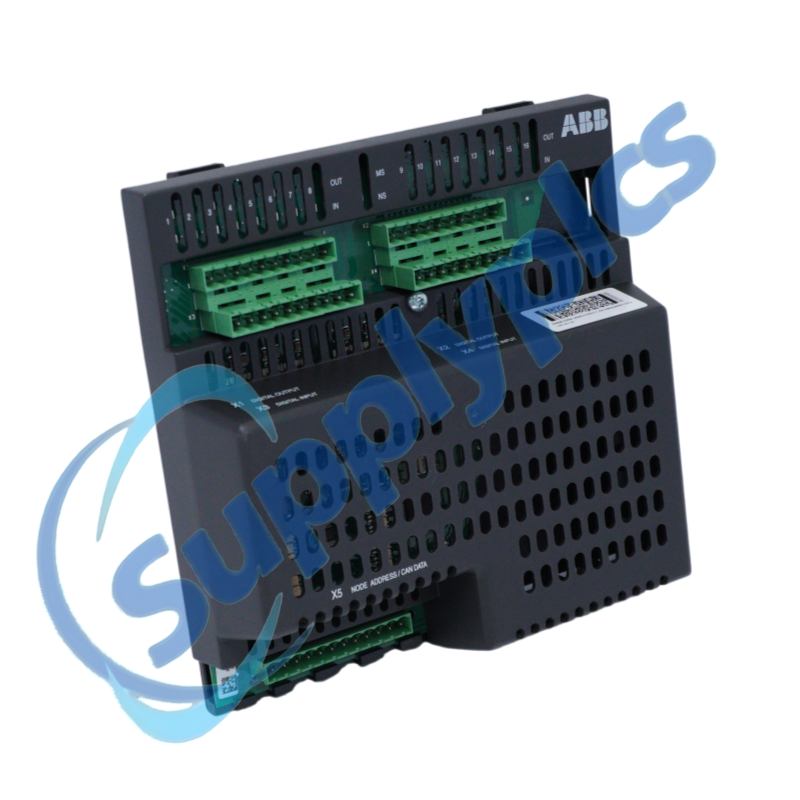
Matching a replacement module for a legacy process control system is not a matter of finding the same family name and ordering it. ABB Contronic replacement modules are configured articles, and the details that decide whether a candidate belongs in your cabinet are printed on the nameplate and in the revision marking, not in the product family. This article explains which details to collect, how to read them, and how to present them so that a supplier can answer against evidence rather than a guess. It states no specifications and reaches no compatibility conclusion; those belong to the manufacturer's documentation and to the engineers who hold the system records. Where this article says a candidate should be confirmed, it means confirmed against the complete order number, the nameplate, the system documentation, and the relevant manual. A disciplined approach to ABB Contronic replacement modules begins with the label on the failed item, and it ends only when the documents agree.
Why Nameplate and Revision Details Decide a Match
A module that looks identical to its neighbour can still be a different article. Two units from the same family may differ in the revision of the assembly, in the options fitted, or in the way they were configured for a particular plant. Those differences are recorded in the identifying marks on the item, and reading them is the first step in any honest comparison. ABB Contronic replacement modules should be described from those marks rather than from memory, from a familiar nickname, or from a photograph taken at an angle.
The revision detail matters because hardware changes over time even when the outward function does not. A later revision may carry different internal arrangements or a different marking scheme, and the documentation for the system may describe one revision and not another. Treating the revision as a formality is how mismatches begin, and it is one of the quiet reasons a spare sits on a shelf unused. For ABB Contronic replacement modules, the revision is part of the identity, not a footnote to it.
It also matters who performs the matching. Identifying a candidate is a task shared between the people who know the process and the supplier who can search against a complete reference. Neither side can do it well without the other's information. The purpose of gathering nameplate and revision details for ABB Contronic replacement modules is to make that conversation precise instead of approximate, so that the first answer is the useful one.
Time is a further reason to work from the label. Modules stay in cabinets for many years, while the people who originally specified them move on, and the reasoning behind an early choice is often lost with them. A note on the item, or a clear photograph of its plate, therefore outlives the project memory it replaces. Building a habit of recording these details for ABB Contronic replacement modules means that the next person to open the cabinet inherits evidence rather than uncertainty, and small as it sounds, that habit is what keeps a legacy system supportable across staff changes.
Reading the Nameplate: What to Record
The nameplate is the authority. Copy the complete order number exactly as printed, character by character, including any separators and suffixes. Do not abbreviate, and do not substitute a family short name for the full reference. Where more than one number appears on the item, record each one and note what it appears to identify, keeping order numbers and assembly numbers apart. A careful nameplate transcription is the foundation of any request about ABB Contronic replacement modules.
Photographs make the transcription verifiable. Take a clear, straight-on image of the plate in good light, and a second image that shows the module in its slot with the surrounding modules visible. These images let the supplier see what you see, and they confirm that the numbers in your message match the numbers on the device. Good images are part of the evidence for ABB Contronic replacement modules, not an optional extra added at the end.
Record the environment as well. The rack or cabinet position, the adjacent modules, the wiring tags, and any labels added during previous work all add context that a bare number cannot carry. If earlier repairs have altered the installation, note that too, because the as-built condition is what a replacement has to suit. ABB Contronic replacement modules are matched to installations, not to catalogues alone.
Revision Letters and Module Variants
Revisions are usually marked in a way that distinguishes one build from another, and the marking is often small. Look for a revision letter, a version code, or a date marking, and record it exactly as found. Where the item carries an assembly number as well as an order number, note both and keep them separate, because merging them is a common source of the wrong article being quoted for ABB Contronic replacement modules.
Variants can also differ in the options fitted, and options are not always visible from the front of a module. A function provided by an option may be idle in daily operation yet still required by the system, or the reverse may be true. The system documentation and the drawings are what establish which options are in play. Any comparison of ABB Contronic replacement modules should therefore be made against those documents rather than against appearance.
It is equally important not to assume that a differently marked item is interchangeable. A revision change can be cosmetic, or it can reflect a genuine difference, and only the documentation can indicate which. Holding that question open until the references agree is the correct posture for ABB Contronic replacement modules, and it is the posture that protects the plant from a surprise during the next outage.
Anonymous Scenario Example
Illustrative anonymous scenario, not a Supplyplcs customer project: In October 2023, in Bangkok, Thailand, an engineer working on a legacy process control cabinet found a module that had failed after many years in service. The cabinet had been extended twice, and two of the drawings still showed the original configuration. Before requesting ABB Contronic replacement modules, the engineer photographed the nameplate, transcribed the complete order number, and recorded the revision marking on the failed item.
The revision on the item did not match the revision shown in the oldest drawing, and one option indicated in that drawing was absent from the installed board. Rather than ordering from the drawing, the engineer assembled an as-built record: the photographs, the transcribed number, the revision marking, and a short note explaining the discrepancy. The enquiry that followed described the installed module rather than the drawing. That is the practical value of ABB Contronic replacement modules discipline in a working cabinet, because it forces the paperwork to catch up with the hardware.

Assembly, Slot, and Documentation Checks
A module is only part of what has to match. The slot it occupies, the assembly it belongs to, and the way it connects to its neighbours are all part of the picture. Record the slot or position, note any keying or mounting detail, and describe what sits immediately around the item. This is the context that turns a part number into a requirement for ABB Contronic replacement modules.
The documents matter as much as the hardware. Gather the manual for the system, the drawings that show the cabinet, and any records of previous changes. Where a document is missing or out of date, say so plainly, because an unrecorded gap is where assumptions grow undisturbed. A file assembled for ABB Contronic replacement modules should list both what is known and what is not.
It is worth keeping this material in one place. A single pack containing the photographs, the transcribed numbers, the revision markings, the drawings, and the open questions travels easily between maintenance, engineering, and procurement. That pack is what makes a request about ABB Contronic replacement modules answerable without a second round of clarification.
Building the Enquiry
An enquiry should read like a description, not a guess. State the complete order number, the revision marking, the model designation, and the role the module plays, and attach the photographs. Add the system context: the cabinet, the slot, and anything unusual about the installation. A request of this kind gives a supplier something concrete to check instead of a family name to interpret.
Where the family context helps, point to it rather than to a guess. The ABB H&B Contronic pages describe the family, and the ABB spare parts pages place it within a wider range; neither replaces your own documentation, but both help frame the request. ABB Contronic replacement modules should still be quoted from the label on your own item, and the parts that the records do not settle should stay open until they do.
For sourcing, Supplyplcs is an industrial automation spare parts supplier that can be approached with a detailed request. Submit the complete model, the full order number, and clear photographs, and set out what the system requires the module to do.
A Checklist Before You Order
Work through the following before a request is sent. Each line should be answered from a label, a drawing, or a confirmed statement rather than from memory.
- Confirm whether the item is a single module or part of a larger assembly, and say which.
- Copy the complete order number exactly as printed on the nameplate.
- Record the revision letter, version code, or date marking without abbreviation.
- Keep order numbers and assembly numbers separate in your notes.
- Photograph the nameplate straight on, in clear and even light.
- Photograph the module in its slot with the surrounding modules visible.
- Note the cabinet position, adjacent modules, and wiring tags.
- Record any field modification or earlier repair that affects the installation.
- Collect the system manual, the cabinet drawings, and records of previous changes.
- List the options the system actually relies on, as shown by the documentation.
- Note every point that cannot be settled from the records.
- Ask the supplier to confirm the item against your documentation before ordering.
The checklist is about evidence, not optimism. It does not replace the manufacturer's documentation or the relevant manuals, and a buyer who works through it before requesting ABB Contronic replacement modules avoids the most common cause of a wrong order.
Conclusion
Nameplate and revision details are the difference between a described module and a guessed one. Read the label completely, photograph it clearly, record the revision exactly, and gather the drawings that show how the item is actually installed. Every later question about ABB Contronic replacement modules is easier to answer when those facts are in hand.
None of this removes the need for engineering judgement, and none of it produces a compatibility conclusion on its own. It simply ensures that the evidence exists, is legible, and travels with the request, so that the people best placed to decide can decide from documents rather than from resemblance. Treated that way, sourcing a replacement module becomes a matter of verification rather than a matter of luck.