 EN
EN

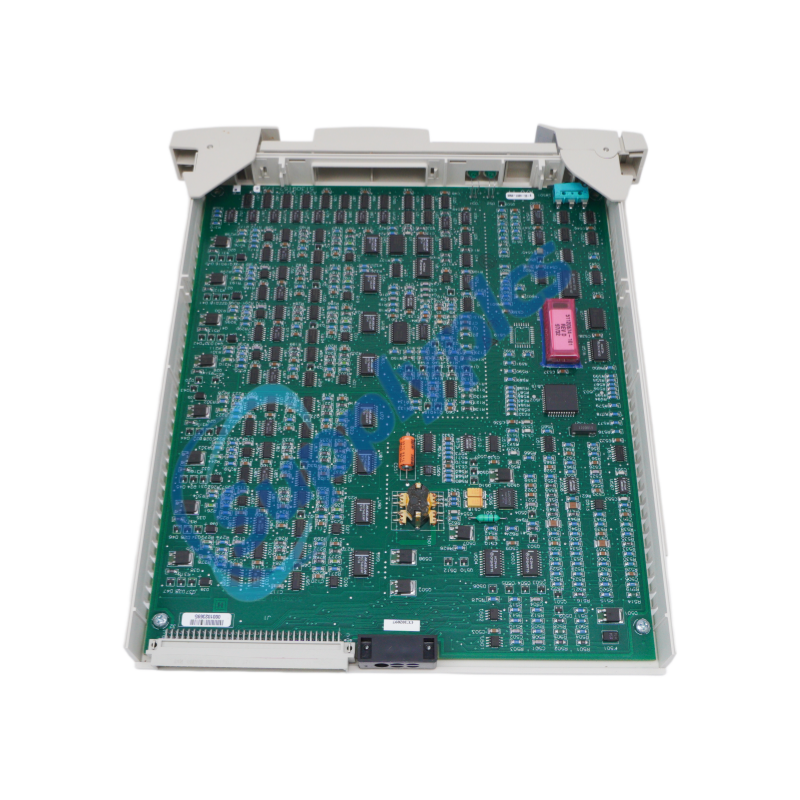
Continuous process operations — refineries, chemical and petrochemical plants, power generation, water treatment, and pulp and paper mills — are built to run for long stretches without interruption. Every hour of unplanned downtime can cascade into lost throughput, off-spec product, safety exposure, and costly restarts. Because a Honeywell DCS often sits at the center of the control layer in these facilities, the condition of its controllers, I/O modules, network components, and power supplies directly influences whether production keeps flowing. Spare parts planning for a Honeywell DCS is therefore not a back-office chore; it is a core reliability discipline.
This guide is written for industrial automation engineers and procurement professionals who must decide which Honeywell DCS spare parts deserve immediate attention and which can wait. It deliberately avoids absolute stock recommendations, because the correct answer depends on each plant's redundancy design, process criticality, and risk tolerance. Instead, it presents a repeatable method built on three practical factors: downtime impact, availability, and installed base. Applied consistently, that method converts a scattered storeroom into a defensible strategy.
Why Prioritization Matters in Continuous Process Operations
In batch manufacturing, a brief pause between runs is often tolerable; the plant can recover on the next cycle. Continuous processes behave differently. A reactor train, a distillation column, or a turbine-generator set cannot simply be paused without consequences that ripple for hours. A single failed module in a Honeywell DCS can remove visibility and control from an operator's screen at exactly the moment when accurate information matters most, and the resulting manual intervention can be slow, stressful, and risky.
The financial and operational stakes are what make prioritization essential. Storage space, maintenance budgets, and procurement attention are all finite. If every part is treated as equally urgent, then nothing is truly prioritized, and the components that could actually halt production end up competing with items that merely inconvenience a maintenance planner. A structured method for a Honeywell DCS removes that ambiguity and gives engineers and buyers a shared language for decisions.
Prioritization also improves how a team responds when something does fail. When the most consequential parts are identified in advance, technicians know where to look first, and procurement knows which requests should bypass routine queues. That preparation reduces the improvisation that so often extends an outage. It also makes the whole Honeywell DCS spares program easier to defend during budget reviews, because each choice can be traced to a stated reason rather than a hunch.
A Three-Factor Prioritization Method
Rather than ranking parts by price or by personal preference, this method scores each candidate against three factors: downtime impact, availability, and installed base. The factors are intentionally simple, so they can be applied quickly, explained clearly, and revisited as the plant changes.
Factor One: Downtime Impact
Downtime impact asks a direct question: if this part fails and no spare is on the shelf, what happens to the process? A part whose failure trips a whole production train, disables a safety-related function, or forces an emergency shutdown carries high impact. A part whose failure only degrades a non-critical display or a redundant monitoring signal carries lower impact.
To score downtime impact consistently, engineers should trace the consequence of failure through the process rather than judging the part in isolation. Consider the role the component plays in a Honeywell DCS, whether redundancy exists, and how long the process can tolerate degraded operation. The answers will differ from plant to plant, and that is exactly the point: impact is a property of your process, not of the part alone.

Factor Two: Availability
Availability concerns how difficult the part is to obtain and how long replacement realistically takes. Some components can be found through several channels on short notice. Others are specialized, single-sourced, or tied to older generations of equipment, where the practical lead time between identifying a need and receiving a workable replacement can be long.
Availability is not a fixed label, and it should be reviewed periodically, because supply situations change. The key insight is that a moderate-impact part with poor availability can outrank a high-impact part that is easy to replace. When teams evaluate a Honeywell DCS spares list, they should treat availability as a counterweight to impact, not as an afterthought.
Factor Three: Installed Base
Installed base means how many copies of a given part are already running in your facility and how widely they are distributed. A component used in dozens of locations has many opportunities to fail, and each failure consumes attention and replacement effort. A component used in only one niche location presents a narrower exposure, even if that single location is important.
Installed base also interacts with standardization. If a plant runs several generations of hardware side by side, the installed base for legacy items may be shrinking while the population of newer items grows. Mapping the installed base of a Honeywell DCS helps a team see where failures are most likely to accumulate and where standardization could reduce future variety. It also highlights common parts that deserve broad, easily accessible coverage.
Combining the Three Factors
The power of the method comes from combining the factors rather than reading them one at a time. A part that scores high on downtime impact, poor on availability, and large on installed base sits at the top of the priority list. A part that scores low on impact, easy on availability, and small on installed base can safely sit at the bottom. Most parts fall somewhere in between, and the discussion that produces those middle rankings is often the most valuable part of the exercise. A well-structured Honeywell DCS priority list therefore reflects trade-offs rather than a single number.
A Worked Example: Ranking a Small List of Parts
Imagine a plant team reviewing four candidate components for a Honeywell DCS: a primary controller module, a redundant power supply unit, an analog input card, and an operator-station display. Rather than debating each part in the abstract, the team scores them against downtime impact, availability, and installed base, then sorts the results into tiers.
The controller module scores high on downtime impact, because its failure can halt the train and it often acts as a focal point of control. If its availability is also limited, it rises to the top tier. The team does not need exact quantities to reach that conclusion; the reasoning is enough to justify early attention and deeper planning.
The power supply unit may be redundant, which lowers its immediate impact, but because several units populate the system, its installed base is larger, raising the number of potential failures. That combination can place it in a middle or upper tier depending on how the redundancy is configured. The analog input card may carry high impact for a specific control loop yet enjoy broad availability, which tends to hold it in a middle tier. The operator-station display usually affects monitoring rather than direct control, so it often ranks lower unless it is the only interface available for a critical area.
The exercise does not produce absolute quantities. It produces an ordered tier list — top tier, middle tier, and watch list — that tells the team where to concentrate effort first. A part in the top tier justifies deeper planning and closer supplier contact; a part on the watch list can be revisited as conditions change. Such a ranking is only a starting point, and it should be refreshed whenever a Honeywell DCS is upgraded or expanded. Over time, the tiers for a Honeywell DCS should be reviewed at least once a year, or sooner if the process or the hardware population changes significantly.
Prioritization Checklist
Use the following checklist when reviewing a spare parts list. Each question pushes the team toward a transparent, repeatable decision rather than a guess, and each answer should be recorded so the reasoning survives staff changes.
- Have you inventoried every Honeywell DCS component and recorded where it is used across the plant?
- For each part, have you traced the consequence of failure through the process to estimate downtime impact?
- Have you checked whether redundancy reduces the impact of a single failure?
- Have you assessed how difficult each part is to obtain and how long replacement is likely to take?
- Have you mapped the installed base so that widely used items are not overlooked?
- Have you grouped parts into clear priority tiers rather than treating all items as equally urgent?
- Have you documented the reasoning behind each tier so the list can be defended and revisited?
- Have you assigned an owner and a review date to keep the Honeywell DCS list current?
- Have you confirmed that each spare's part number and model description are recorded exactly as they appear on the equipment?
- Have you planned how to describe a needed part clearly, including complete model details and photographs, when requesting a quotation?
Sourcing and Supplier Collaboration
Once priorities are set, sourcing becomes the next step. No plant can hold a spare for every eventuality, so some needs will be met only when a failure occurs. At that moment, the quality of the information a team provides makes a measurable difference in how quickly and accurately the need can be addressed.
When a required part is not on hand, clear communication speeds up the search. A useful practice is to prepare a complete description before contacting any supplier: the exact model number, the full part designation as printed on the label, and clear photographs of the item and its nameplate. Complete model details and photos reduce the chance of receiving an incompatible component and make it easier for a supplier to identify the correct item.
Supplyplcs is an industrial automation spare parts supplier, and teams working on a Honeywell DCS can submit a complete model number together with photographs to request a quotation. Providing detailed information at the outset helps both sides avoid repeated back-and-forth and keeps the focus on matching the requirement precisely. The same discipline that drives prioritization also improves sourcing, because a well-documented Honeywell DCS requirement is easier to communicate than a vague one.
It also helps to think about sourcing as part of the same prioritization method rather than a separate activity. A part with high downtime impact and limited availability deserves early attention in the sourcing process, while a low-impact item can wait. Applied this way, the three factors continue to guide decisions long after the initial list is built, and they keep the Honeywell DCS spare parts list aligned with the realities of the plant.
Conclusion
Prioritizing spare parts for a Honeywell DCS is a discipline, not a one-time purchase decision. By scoring each component against downtime impact, availability, and installed base, engineers and procurement teams gain a shared, transparent way to decide where to act first. The method rewards reasoning over guesswork and keeps attention on the parts that genuinely protect production.
The method does not demand absolute stock quantities, and it should not pretend to. Requirements vary with process design, redundancy, and risk appetite, and they evolve as a plant changes. What the method does provide is a consistent framework that a team can explain to managers, auditors, and one another. Revisit the list regularly, keep part descriptions accurate, and collaborate with a supplier such as Supplyplcs by submitting complete model details and photographs when quotations are needed. Handled this way, a Honeywell DCS spares strategy stays practical, defensible, and ready for the day it is tested.