 EN

When a controller that has run for twenty years disappears from a machine, the first instinct is to search for the same order number and buy the first unit that appears. That instinct is understandable and it is also where most legacy maintenance budgets leak. The part may exist in a warehouse, it may be a revision that never worked in your rack, and it may have been pulled from a machine with the same fault you are trying to solve. Discontinued PLC parts lifecycle sourcing is a research exercise before it is a purchasing exercise, and the research has a fixed order: establish status, verify the specific unit, then choose a route.
This discontinued PLC parts lifecycle sourcing guide separates the questions buyers usually blend together, explains how to read manufacturer lifecycle information without guessing, and sets out what a sourcing enquiry should contain so that the answers you receive are comparable. It also covers the alternatives worth considering when the exact article is no longer produced, and the claims that should never be accepted without documentation.
Two Different Questions: Lifecycle Status and Market Availability
Lifecycle status is a manufacturer statement about the product line. Market availability is a commercial fact about what someone is willing to sell this week. They are related and they are not the same, and treating them as the same is the most common error in discontinued PLC parts lifecycle sourcing.
A product can be formally discontinued by the manufacturer and still be widely traded for a decade, because installed fleets keep consuming spares that were produced in volume before phase-out. Equally, a part can still appear on a distributor website while the manufacturer has already announced a phase-out date, which means the supply will narrow rather than recover. Neither situation tells you whether a specific unit in a specific carton is correct for your machine.
Any discontinued PLC parts lifecycle sourcing plan should therefore carry two separate columns: what the manufacturer says about the product's lifecycle phase, and what the market currently offers. The first column changes slowly and is documented. The second changes weekly and is usually verbal, which is precisely why it belongs in a dated note rather than in a specification.
Reading OEM Lifecycle Status Without Guesswork
Start with the manufacturer's own lifecycle or product support documentation for the exact order number, not for the product family name, because that exact-number habit is the foundation of every reliable discontinued PLC parts lifecycle sourcing review. Family-level pages describe families; procurement decisions depend on order numbers.
Look for four pieces of information. First, whether the product is active, in phase-out, discontinued, or no longer supported. Second, whether a successor or migration path is named, and what engineering change that path implies. Third, whether technical documentation, programming software and firmware remain available, because a part whose tooling has vanished is only half a spare. Fourth, whether the manufacturer states any limitation on repair or exchange, since that affects the whole route rather than a single purchase.
Read the wording precisely. Phases that sound similar carry different consequences: announced end of sale, end of delivery, end of service, and end of support are separate milestones, and a plan built on the wrong one fails at a predictable moment. Where the documentation is silent, record the silence as unknown rather than filling it with an assumption borrowed from a forum post.
Third-party catalogue text, including the copy on trading sites, is not a lifecycle statement. It may be accurate, it may be copied from an older page, and it may describe a sibling product. Discontinued PLC parts lifecycle sourcing that cites a marketplace title as evidence of lifecycle status is citing a sales document as a technical record.
Verifying the Specific Unit: Date, Revision and Condition
Once status is understood, discontinued PLC parts lifecycle sourcing moves to the unit itself, and this is where most of the risk sits. Two parts with identical labels can differ in revision, production date, memory configuration and history.
Begin with the rating label. Transcribe the complete order number, the hardware revision, the serial or lot marking and any date code, and compare them character by character with the installed unit and with the machine documentation. A single different suffix can mean a different memory size, a different interface or a different firmware family, and the difference is invisible once the part is in the cabinet.
Ask for photographs of the actual unit rather than of the product family; a discontinued PLC parts lifecycle sourcing file without recent images of the specific unit is incomplete. The label, the connectors, the board markings and the packaging should all appear in one set, taken after the unit was received rather than borrowed from a brochure. If the images look like catalogue renders, ask again.
Establish what the condition description actually means. Used, pulled, surplus and excess stock describe provenance, not condition, and they say nothing about whether the unit was energized, stored in humidity or repaired locally. Ask what inspection was performed, by whom, using what method, and ask for the result in writing. A statement that a unit was tested is only useful when the test method and the party who performed it are identifiable; otherwise it is a claim, and a claim is not a record. This is the discipline that separates a real discontinued PLC parts lifecycle sourcing decision from a hopeful purchase.
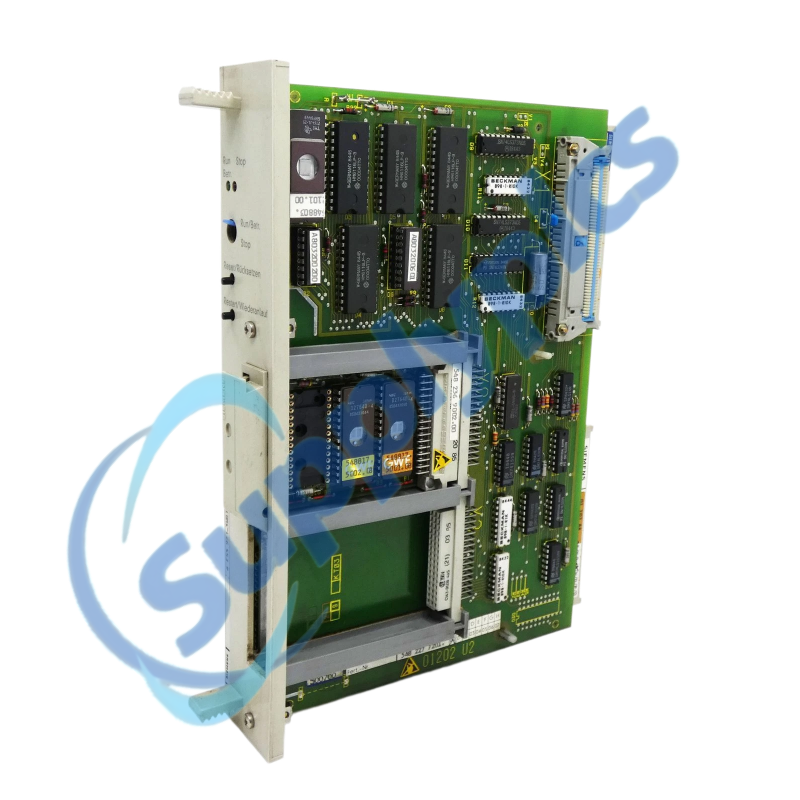
A concrete example of the documentation problem is the SIMATIC S5 CPU 921 listing, where the supplier describes the item as a discontinued legacy component and states that the rack, backplane and hardware revision must be verified before a replacement is selected. That is the correct shape of a claim: it tells the buyer what to check instead of promising an outcome.
Alternative Routes When the Exact Article Is Gone
Discontinued PLC parts lifecycle sourcing rarely ends with a single route: the exact part is one option among several, and the cheapest is not always the fastest. Weigh at least five options before committing.
- Identical order number and revision from surplus or excess stock. Lowest engineering effort, highest dependence on the provenance of a single unit.
- A later revision of the same order number, where the manufacturer documentation supports interchangeability for that application. This requires a documented comparison, not an assumption based on similar labels.
- A named successor product with an engineering change: adapter modules, rewiring, updated configuration or program conversion. More work up front, more predictable supply afterwards.
- Migration of the control section to a supported platform. Highest cost and longest outage, and the option that finally removes the lifecycle problem instead of deferring it.
- Continuation of the existing unit through maintenance and repair by a qualified third party, where the fault is repairable and the unit's history is known.
Each route carries a different failure mode. Surplus stock can dry up mid-project. Successors can require program changes that were not budgeted. Migration can collide with a validated process. Repair can return a unit whose remaining life is unknown. A discontinued PLC parts lifecycle sourcing plan should name the chosen route, the reason for it and the fallback if it fails, because the fallback is what keeps a shutdown from becoming an outage.
What a Sourcing Enquiry Should Contain
Suppliers can only answer what they are asked, and vague enquiries produce optimistic answers in any discontinued PLC parts lifecycle sourcing exercise. Send a structured enquiry for every part and keep the replies side by side.
- Complete order number and hardware revision, taken from the installed unit rather than from memory.
- Photograph of the installed unit's label, so the supplier can compare rather than interpret.
- Quantity required and whether the requirement is immediate or planned.
- The application and the consequence of failure, stated factually, because it changes what documentation matters.
- The lifecycle status you have already established, and the source you used.
- The condition description you will accept, and the evidence you require to support it.
- The provenance you need: original packaging, removal record, or documented test evidence.
- The date by which you need a decision, separate from the date by which you need delivery.
- A request to identify which statements are confirmed and which are reported.
- A request for the supplier's terms in writing, including what happens if the unit does not match the description.
The last two items do most of the work. A supplier who separates confirmed facts from reported ones is easier to trust than one who answers every question with reassurance, and written terms are the only terms that survive a change of account manager. This is also where a buyer learns whether a quoted price reflects a verified unit or a hopeful one, since discontinued PLC parts lifecycle sourcing enquiries sent to several suppliers quickly expose which replies are substantive.
Anonymous Scenario Example
Illustrative anonymous scenario, not a Supplyplcs customer project.
In June 2024, at a legacy factory control system in Jakarta, Indonesia, a production engineer faced a central processing unit that would not hold its program after a power disturbance. The installed unit was long out of production, the program backup existed only on a decade-old laptop, and the plant had four weeks before a seasonal demand peak.
A first, unstructured round of discontinued PLC parts lifecycle sourcing asked only for the order number and a price. Three replies arrived within two days, all quoting the same model, two of them describing the item as new and one as pulled from service. None mentioned revision, date code or test evidence. A second, structured round asked for label photographs, the complete revision string, provenance, and a statement of what had been confirmed versus reported. Two suppliers withdrew, one supplied photographs showing a different suffix on the order number, and one replied with a label photograph matching the installed unit plus a description of storage conditions.
The engineer then ran a discontinued PLC parts lifecycle sourcing review with the plant's controls integrator: the manufacturer documentation confirmed the family was discontinued with no drop-in successor, the program backup was verified as readable, and the chosen route was an identical revision from the verified source, held as a spare, with a migration study scheduled for the following financial year.
The replacement unit was installed in a planned window, not during a failure. The value of the exercise was not that a part was found; it was that the plant learned which of its three enquiries described real units, and that the migration decision no longer waited for the next emergency.
Limits: Stock, Compatibility and Service Claims
Three claims deserve particular scepticism in discontinued PLC parts lifecycle sourcing, because each one converts a commercial hope into a maintenance plan.
Stock. A listing that shows a quantity, or a page that invites immediate purchase, does not constitute a commitment to ship that unit to your site on a date. Availability is confirmed per enquiry, in writing, against a specific part and revision. Any plan that assumes otherwise is a discontinued PLC parts lifecycle sourcing plan with an unmanaged dependency.
Compatibility. Similar housings, similar connectors and similar names do not establish interchangeability. Compatibility is a conclusion that belongs to the machine documentation, the manufacturer's successor data and a qualified engineer, applied to your rack, your program and your process, and not to discontinued PLC parts lifecycle sourcing assumptions. A supplier can tell you what a unit is; only engineering can tell you what it will do in your cabinet.
Service. Repair, refurbishment, exchange, return and warranty arrangements differ by supplier and by part, and they must be read from the terms attached to the specific quotation rather than inferred from a general website statement. The same applies to any certification claim: ask for the document, the issuer and the scope, and treat an unqualified badge as decoration.
Conclusion
Discontinued parts are not a shopping problem; as any honest discontinued PLC parts lifecycle sourcing review shows, they are a documentation problem. The plant that knows its revision strings, keeps a readable program backup, and can describe the provenance of each spare makes good decisions quickly even when the market is thin. The plant that does not will keep buying the same part twice and calling it bad luck.
Good discontinued PLC parts lifecycle sourcing practice is therefore cumulative: status established from manufacturer documents, the specific unit verified against the installed label, alternatives weighed with engineering, and every claim separated into confirmed and reported. Supplyplcs is an industrial automation spare parts supplier, and buyers get further with it, and with any comparable supplier, when they send the structured enquiry described here and ask for what can be evidenced rather than what can be promised.
Table of Contents
- Two Different Questions: Lifecycle Status and Market Availability
- Reading OEM Lifecycle Status Without Guesswork
- Verifying the Specific Unit: Date, Revision and Condition
- Alternative Routes When the Exact Article Is Gone
- What a Sourcing Enquiry Should Contain
- Anonymous Scenario Example
- Limits: Stock, Compatibility and Service Claims
- Conclusion