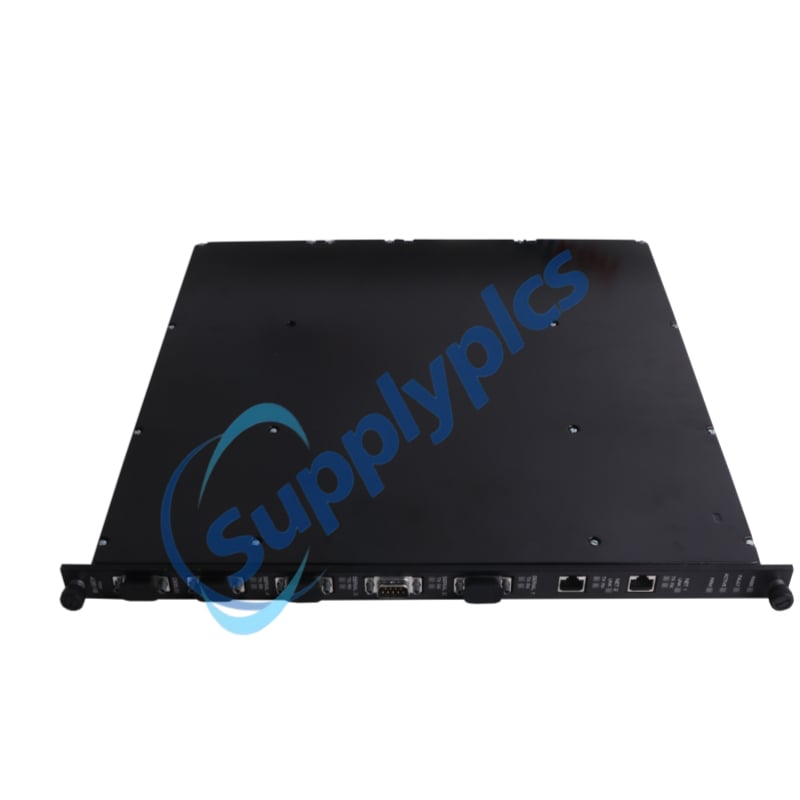
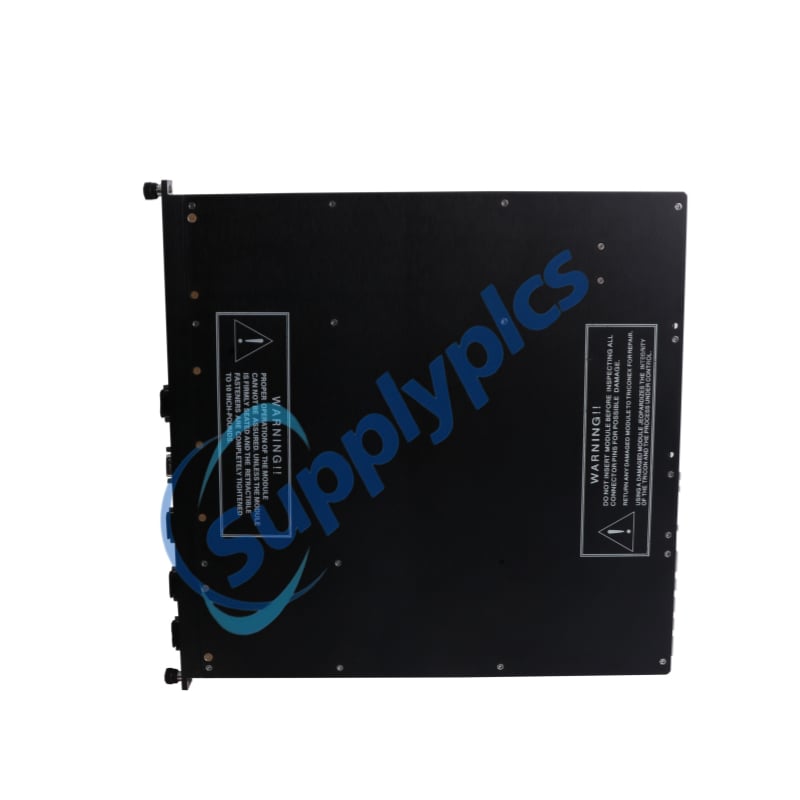
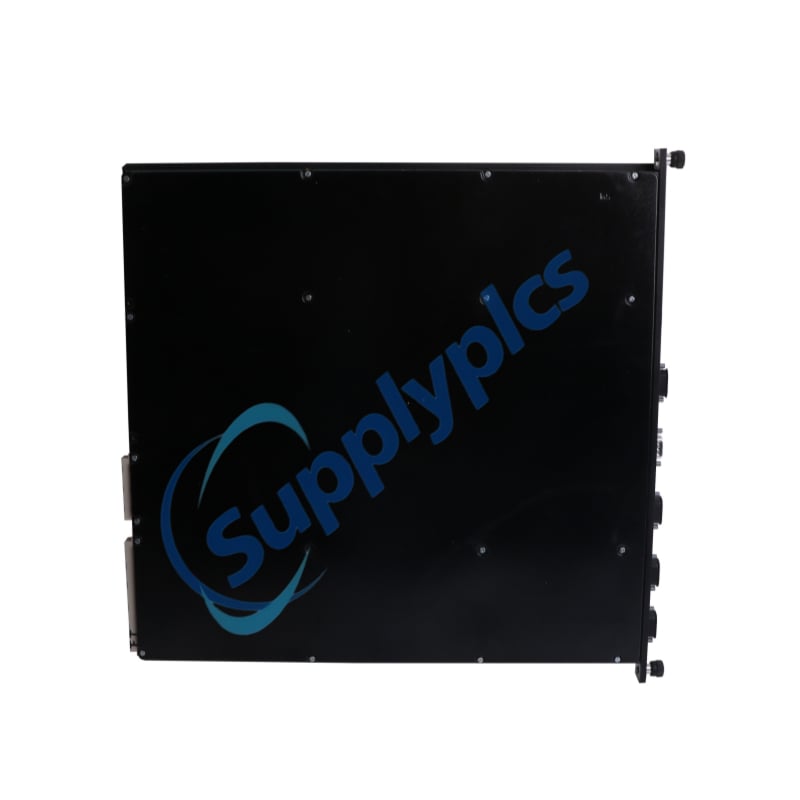
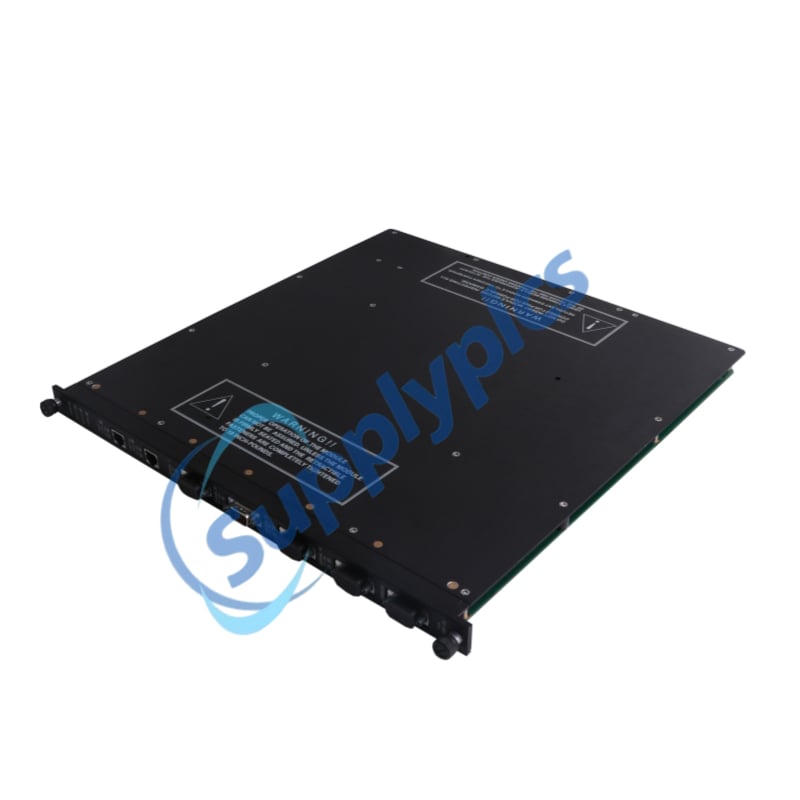
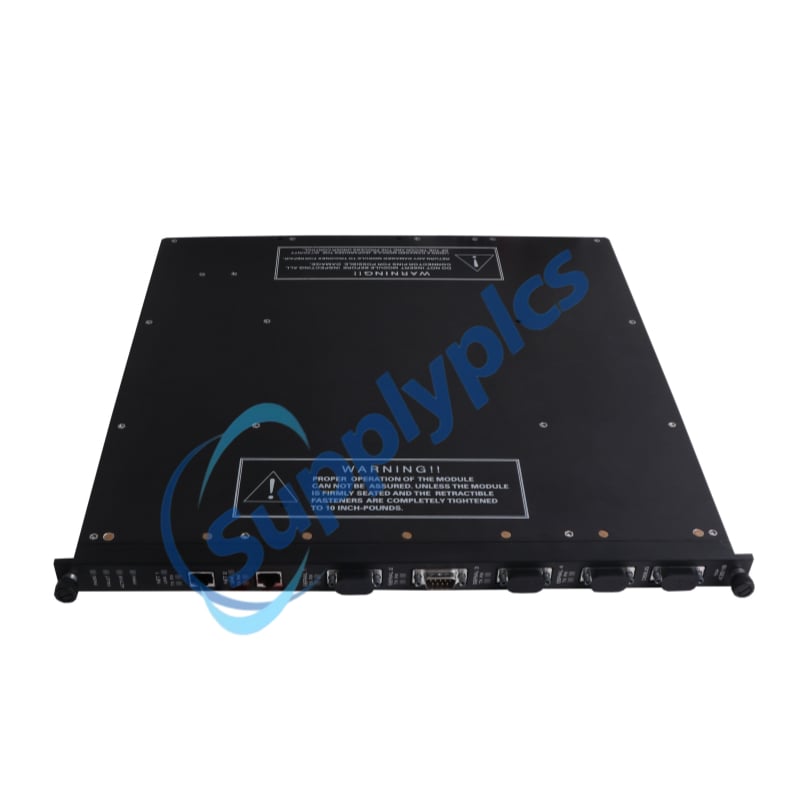
Product Name:Communication Module
Brand Name: TRICONEX
Model Number:4351B
Country of Origin:USA
Warranty: 12 Months
Whatsapp:+86 18159889985
Email:[email protected]

Brand Name: |
ICS TRIPLEX |
Model Number: |
4351B |
Country of Origin: |
USA |
Packaging Details: |
Original new Factory Sealed |
Delivery Time: |
Delivery time in stock |
Payment Terms: |
T/T |
|
Sales Manager: |
Stella |
|
Send an email: |
|
|
Contact in Whatsapp: |
|
Specification |
Details |
|
Model Number |
4351B |
|
Product Type |
Tricon Communication Module (TCM), copper Ethernet version |
|
System Compatibility |
Tricon v10.0 and later systems |
|
Serial Ports |
4 × RS-232/RS-485, DB-9 connectors |
|
Serial Baud Rate |
Up to 115.2 Kbps per port |
|
Aggregate Serial Data Rate |
460.8 Kbps (all four ports combined) |
|
Network Ports |
2 × 10/100BaseT copper Ethernet, RJ-45 connectors |
|
Port Isolation |
500 VDC galvanic isolation |
|
Supported Protocols |
TriStation, Modbus RTU/ASCII, Modbus TCP/IP, TCP/IP, ICMP, SNTP, TSAA (with IP Multicast), Trimble GPS, Peer-to-Peer (UDP/IP), Peer-to-Peer Time Synchronization, Jet Direct (network printing) |
|
Modbus Function Codes |
01, 02, 03, 04, 05, 06, 07, 08, 15, 16 (full support for coil/register read/write, diagnostics, forcing) |
|
Processor |
32-bit, 33 MHz |
|
Memory |
1 MB RAM, 4 MB Flash |
|
Input Voltage |
24 VDC (±10%) |
|
Power Consumption |
≤5 W |
|
Operating Temperature |
–40 °C to +70 °C |
|
Storage Temperature |
–40 °C to +85 °C |
|
Relative Humidity |
5 % to 95 %, non-condensing |
|
Ingress Protection |
IP20 (module level) |
|
Dimensions |
175 mm × 100 mm × 50 mm (approx.) |
|
Weight |
≈ 2.3 kg – 3.18 kg |
|
Installation |
Standard Tricon chassis mounting (3U rack), hot-swap capable |
|
Safety Certifications |
IEC 61508 SIL 3, IEC 61511, TÜV certified |
|
EMC / Electrical Compliance |
CE, UL 508, CSA C22.2 No. 142, RoHS |
|
Alias Mapping |
5-digit alias numbers required for Modbus communication; assigned via TriStation 1131 |
The TRICONEX 4351B is a Tricon Communication Module (TCM) designed for Tricon safety instrumented systems. As a copper Ethernet version of the TCM family, the 4351B acts as a high‑integrity gateway between the Triple Modular Redundant (TMR) controller and external networks. It provides two 10/100BaseT Ethernet ports and four software‑configurable RS‑232/RS‑485 serial ports, supporting Modbus master/slave, TriStation, TSAA, Peer‑to‑Peer, Trimble GPS and SNTP protocols. Certified to IEC 61508 SIL 3, the TRICONEX 4351B features 500 VDC galvanic isolation, hot‑swap support, an aggregate serial data rate of 460.8 Kbps and full Modbus function code support (01–16). The module is fully compatible with Tricon v10.0 and later systems and integrates seamlessly with DCS, SCADA, PLCs and third‑party Modbus devices. A TriStation‑assigned 5‑digit alias is required for each Tricon variable to enable Modbus communication.
Emergency Shutdown (ESD) Systems – provides reliable communication between the Tricon controller and remote operator workstations, DCS systems and annunciator panels for safety‑critical trip events
Fire & Gas (F&G) Detection – transmits real‑time fire and gas alarm data from Tricon to SCADA, safety displays and plant‑wide control systems via Modbus TCP/IP or TSAA protocols
Burner Management Systems (BMS) – enables communication between Tricon and boiler control systems, burner management panels and distributed control systems for flame safety and purge monitoring
Turbine Control & Protection – connects Tricon overspeed protection logic to turbine control systems, enabling remote monitoring of speed, vibration and temperature signals
High‑Integrity DCS Integration – acts as a communication bridge between Tricon safety systems and distributed control systems from major vendors (ABB, Yokogawa, Honeywell, Foxboro)
Peer‑to‑Peer Controller Networking – allows multiple Tricon controllers to exchange safety‑critical data over TÜV‑certified peer‑to‑peer Ethernet networks
Time‑Synchronised Safety Systems – synchronises multiple Tricon controllers to a common time base using SNTP or Trimble GPS, enabling accurate Sequence of Events (SOE) logging across distributed nodes
Oil & Gas / Petrochemical / Power Generation – provides high‑availability communication in refineries, LNG plants, offshore platforms, chemical reactors and fossil / nuclear power stations
Triple Modular Redundancy (TMR) compatible – designed to function within the Tricon TMR architecture; supports up to four TCMs per system (two logical slots, up to two matched TCMs per slot)
Dual copper Ethernet ports (10/100BaseT) – two independent RJ‑45 ports: NET 1 supports Peer‑to‑Peer (UDP/IP) and Time Synchronisation; NET 2 supports open networking with TriStation, Modbus TCP, TSAA and network printing; link redundancy is supported
Four software‑configurable serial ports – four DB‑9 RS‑232/RS‑485 ports, each programmable as Modbus master or slave; Port 1 supports Trimble GPS, Port 4 supports TriStation; ideal for integrating legacy Modbus devices
IEC 61508 SIL 3 certified – TÜV approved for safety instrumented functions; the TCM itself does not perform safety logic but maintains communication integrity within a SIL‑3 rated safety system
500 VDC galvanic isolation – port‑to‑port and port‑to‑system isolation protects the Tricon backplane from field‑side electrical surges and electromagnetic interference (EMI)
Hot‑swap capability – online module replacement without system power‑down or process interruption; although TCM does not support active hot‑standby, a faulty TCM can be replaced while the controller remains operational
Full Modbus function code support – complete implementation of Modbus functions 01–16, including read coils, read input status, read holding registers, read input registers, force single coil, preset single register, loopback diagnostic test, force multiple coils and preset multiple registers
Wide operating temperature range – –40 °C to +70 °C module‑level, suitable for extreme industrial environments and outdoor cabinets with temperature management
TriStation 1131 software integration – configure aliases, monitor module status and diagnose faults directly from the TriStation 1131 Developer‘s Workbench
Embedded OPC server (Models 4353/4354 only) – the 4351B itself does not include an embedded OPC server; for embedded OPC functionality, refer to models 4353 (copper) or 4354 (fiber)
Port status monitoring – front‑panel PASS, FAULT, ACTIVE, FIRM, LINK, TX and RX LEDs for module‑level and per‑port diagnostics
Supports up to 32 Modbus masters / slaves per system – combined total across all network and serial ports, allowing large‑scale Modbus device integration
Multi‑protocol communication bridge – receives data from the Tricon main processors via the Triplicated I/O bus and broadcasts it across Ethernet (Modbus TCP, TSAA, TriStation) and serial (Modbus RTU/ASCII) networks; conversely, receives external commands and forwards them to the Tricon logic solver
Modbus master / slave operation – each serial port can be independently configured as a Modbus master (polling up to 32 slave devices) or Modbus slave (responding to external masters). NET 2 supports Modbus TCP slave and master modes. All Modbus communication uses aliases: 5‑digit numbers assigned in TriStation to represent variable names, message type and hardware address
Peer‑to‑Peer (P2P) protocol – enables direct data exchange between Tricon controllers on a safety‑certified Ethernet network (UDP/IP) without passing through a central host. Supports up to 254 nodes; used for small‑block safety and process information transfer between multiple safety controllers
Time synchronisation – supports SNTP (Simple Network Time Protocol) and Trimble GPS interfaces for network‑wide time alignment. Synchronised timestamps enable accurate Sequence of Events (SOE) logging across distributed Tricon nodes with ±25 ms worst‑case deviation
TriStation 1131 communication – provides the communication channel between the TriStation 1131 software and the Tricon controller, allowing program download, online monitoring, debugging and variable forcing
Alias‑based variable mapping – every Tricon variable intended for Modbus access must be assigned a unique 5‑digit alias number (class + type + address). The alias defines the Modbus message format (coil, input status, holding register, input register) and the hardware location, enabling any standard Modbus device to read or write Tricon data
TSAA protocol – supports the Tricon System Access Application (TSAA) protocol (TCP/UDP/IP), allowing external host applications (OPC clients, DDE servers, user‑written control programs) to read and write Tricon aliased data over Ethernet
Jet Direct printing – supports network printing of alarm logs, event reports and diagnostic information directly to network‑attached printers via the Ethernet port
Diagnostic status reporting – internal self‑diagnostics continuously monitor port link status, protocol handshake integrity, power supply conditions and microprocessor health. Status is reported via front‑panel LEDs (PASS, FAULT, ACTIVE, FIRM, LINK, TX, RX per port) and can be read by the application program via the information rack (Rack 8: INFO)
Hot‑swap operation – when a TCM is replaced online, the Tricon main processor automatically re‑initialises and re‑educates the new TCM without requiring a system power cycle. The module removal switches (ejector levers) generate an interrupt, and the changeover is logged in the system event log
Limitation – no active hot‑standby for TCM – unlike I/O modules (which support Companion Slot or SmartSlot active/standby pairs), TCMs do not support active hot‑standby. However, a faulty TCM can be replaced online, and system communication is re‑established after the new module is educated
Q1: Is the TRICONEX 4351B compatible with older Tricon v9 systems?
A1: No. The 4351B is designed exclusively for Tricon v10.0 and later systems. For Tricon v9 systems, use the older 4328 or 4329 NCM modules.
Q2: Does the 4351B support embedded OPC server functionality?
A2: No. The 4351B does not include an embedded OPC server. For embedded OPC server functionality, use 4353 (copper Ethernet) or 4354 (fiber‑optic Ethernet) models.
Q3: Can the 4351B replace a faulty 4351A?
A3: Yes. The 4351B is functionally identical to the 4351A – only version differences exist. A 4351B can directly replace a 4351A in an existing Tricon system without hardware modification or configuration changes.
Q4: How many 4351B modules can be installed in one Tricon system?
A4: A single Tricon system supports a maximum of four TCMs, which must reside in two logical slots (up to two TCMs per slot). Different TCM models cannot be mixed within the same logical slot. The system supports up to 32 Modbus masters or slaves in total across all network and serial ports.
Q5: Does the 4351B support hot‑swap replacement?
A5: Yes. The 4351B supports hot‑swap: a faulty TCM can be removed and replaced while the Tricon chassis remains powered. However, TCMs do not support active hot‑standby pairs – there is no automatic failover between two TCMs in the same logical slot. After replacement, the new TCM must be educated by the main processor, which occurs automatically. Communication resumes after the education process completes.
Enquiry Now : [email protected]
 EN
EN