 EN


When a spare PLC module is offered as "tested," the word carries a lot of weight and often very little definition. A buyer under pressure to restore a line may accept the claim at face value and move on. A more reliable approach is to ask what evidence sits behind the word. If a seller refers to a PLC module test report, the buyer's next step is not to trust the label but to request the document and read it. This guide is written for maintenance engineers, planners, and procurement staff who want to understand what a PLC module test report should contain before they rely on it. It does not describe any particular seller's process, and it does not claim what any specific report will show. Its purpose is to help you ask better questions and to recognise a PLC module test report that is specific enough to be useful rather than merely reassuring.
The stakes are simple. A module purchased on the strength of an unclear claim may arrive and behave differently from what was promised, and by then the production pressure that drove the purchase has only increased. Reading the evidence first is cheaper than discovering its absence later. A well-prepared PLC module test report gives the buyer something to compare against the item when it arrives, and it records what was known at the point of sale.
Why Buyers Ask for a PLC Module Test Report
The request for documentation is not an accusation. Sellers who invest in preparing a PLC module test report often welcome a buyer who reads it, because the document explains the item on the seller's behalf. From the buyer's side, the report answers a question that a verbal assurance cannot: what was actually done to this unit, and what was found? A report also creates a shared record. If a disagreement arises later, both parties can return to the same document rather than to a remembered conversation.
Buyers also ask because the term "tested" is used loosely. For one seller it may mean a full functional check; for another it may mean only that the unit powered up. The only way to tell the difference is to read the evidence. That is why a buyer should treat a PLC module test report as a document to be examined, not a phrase to be accepted.
What a PLC Module Test Report Should Identify
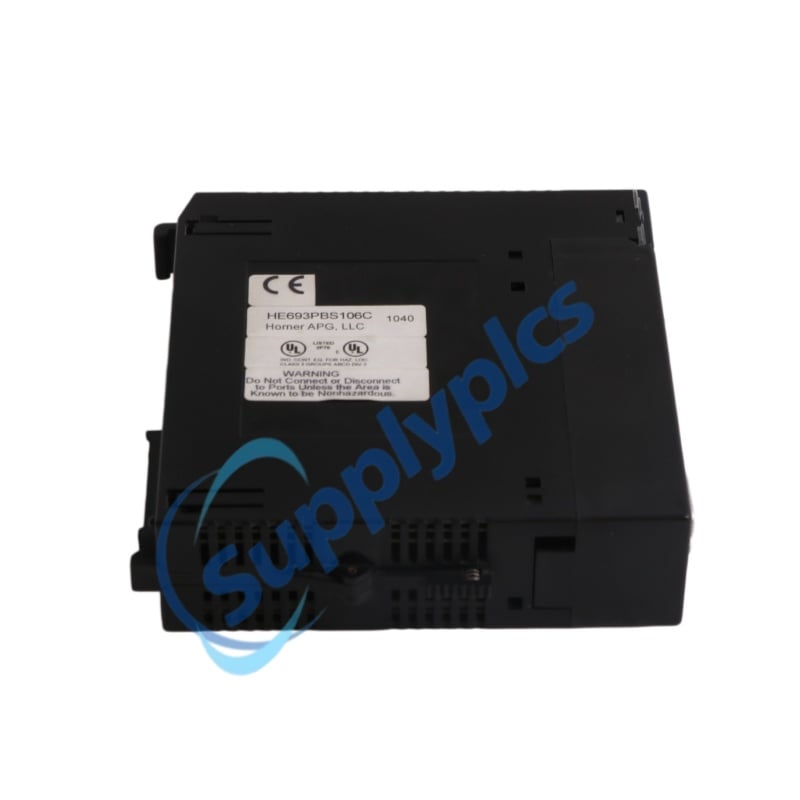
A useful report begins with identity. It should state the full model or order code, any revision or version marking, and a serial number or other unique identifier, so that the document can be tied to the exact unit in front of you. Without identity, the rest of the report could describe any unit of the same type, and the buyer has no way to know which one was examined. A document that cannot be tied to a specific unit cannot serve as a PLC module test report for that unit.
A PLC module test report should also describe its scope, and just as importantly, set out what was not examined. A module has many functions, and a report that lists a single passing result without saying how much of the unit was covered is only partly informative. The document should state the conditions under which the checks were performed, the measurements or observations that were recorded, and the criteria used to decide pass or fail. Any limitations or caveats belong in the report too, because they tell the buyer where residual uncertainty remains.
Dates and responsibility add credibility. A PLC module test report should record when the check was carried out and who performed it, in a form that a reviewer can follow. The buyer is not necessarily trying to audit the seller; the buyer is trying to understand how much weight the document can bear. A report with clear dates and named responsibility is easier to trust than one with neither.
Finally, a report should separate what was observed from what was concluded. "No signal detected on output channel three under the stated conditions" is an observation. "Module is good" is a conclusion. Both may be legitimate, but only the first can be checked. When you read a PLC module test report, look for the observations and let the conclusions follow from them.
Reading the Evidence, Not Just the Conclusion
A headline that reads "passed" is the least useful part of a document on its own. The value comes from the detail around it: which functions were exercised, what the expected behaviour was, and what was actually recorded. If the report reduces everything to one word, ask for the underlying detail or ask what could not be shown.
Check that the identity in the document matches the item you intend to buy. A report for a similar model is not a report for your model, and a report without a serial reference cannot be matched to a specific unit. This single check prevents the most common form of misunderstanding, in which a general document is taken to describe a specific article.
Look also for what the report declines to claim. A trustworthy document will say when a function was not tested, when a measurement was skipped, or when the unit was examined only externally. Absence of a claim is information, and a report that acknowledges its boundaries is usually more useful than one that sounds complete but says little. A buyer reading a PLC module test report should be able to answer three questions afterwards: what was tested, how, and what was found. If those questions cannot be answered from the document, the PLC module test report is not yet complete enough to rely on.
Common Shortcuts That Weaken a PLC Module Test Report
Some reports look thorough but are built on shortcuts that reduce their value. One is testing a single function and generalising the result to the whole unit. Another is recording a verdict without any supporting observation, so the reader has nothing to check. A third is copying results from an earlier report without confirming that they describe the unit now being sold. Each shortcut can be spotted by asking a simple question: does the document show how the conclusion was reached?
A related shortcut is silence about scope. A PLC module test report that never states what was not examined invites the reader to assume more coverage than the evidence supports. The remedy is straightforward. Ask the seller to confirm the boundaries of the check in writing, and compare that statement with the item you intend to buy. If the boundaries are unclear, treat them as unknown rather than as favourable.
The same caution applies to wording. Phrases such as "fully tested" or "all functions verified" are claims about scope, and they deserve the same scrutiny as any other statement. Note the exact wording in your file, and ask what it is based on. A specific list of what was checked is far more useful than an ambitious adjective.
Finally, watch for documents that substitute presentation for detail. A clean layout and confident language are not evidence. The substance of a PLC module test report lies in its specific, checkable statements about identity, conditions, and results, and those statements are what allow a buyer to weigh the claim. Spending a few minutes on these points before purchase is almost always less expensive than discovering a gap afterwards, when the pressure to resolve a fault leaves little room for careful comparison.
Questions to Put to the Seller
Written questions produce written answers, and written answers are easier to evaluate. Ask for the PLC module test report itself rather than a summary, and ask for the identity fields, the scope, the conditions, the measured results, and the date to be clearly present. If something is missing, ask whether it exists in another document, and be prepared to weigh the answer.
It also helps to ask about the unit's condition and completeness, because those affect how you will use it. Ask what accessories are included, how the item will be packed, and what the seller states about condition in writing. None of this requires the seller to guarantee an outcome; it simply ensures that what you are buying is described precisely.
If you are sourcing through a supplier such as Supplyplcs, an industrial automation spare parts supplier, its category pages for the GE 90-30 Series PLC and the GE PACSystems RX3i can help you identify the module family you are dealing with before you ask for evidence. The test documentation, however, must come from whoever performed the checks, and any document you receive should be read on its own terms rather than taken on trust.
Anonymous Scenario Example
Illustrative anonymous scenario, not a Supplyplcs customer project.
In October 2023, an engineering team in Bangkok, Thailand was offered a PLC module described by the seller as "tested." Before approving the purchase, the buyer asked to see the PLC module test report behind the description. The document that arrived listed a passing result but omitted the unit's identity, the conditions under which it had been checked, and the date of the check. The buyer returned with three questions: which unit was tested, how it was tested, and when. Because the seller could not answer all three from the document alone, the buyer asked for a more complete PLC module test report before making a decision. The lesson is not that the module was unsuitable; it is that the evidence did not yet support the claim. The scenario is anonymous and is presented here only to show how a documentation request can change a purchasing decision.
Checklist for Reviewing a Test Report
Use this checklist before you rely on any document of this kind:
- The report identifies the unit by model or order code.
- A revision or version marking is stated.
- A serial number or unique identifier ties the report to the item.
- The scope of testing is described, including what was not tested.
- The conditions of the checks are recorded.
- Measured or observed results are shown, not only a verdict.
- Pass or fail criteria are stated.
- The date of the check is present.
- The person or function responsible is identified.
- Limitations and caveats are acknowledged rather than hidden.
- Observations are separated from conclusions.
- The identity in the report matches the item you intend to buy.
Conclusion
A test report is only as useful as its specificity. Identity, scope, conditions, results, dates, and limitations are what allow a buyer to judge how much weight the document can carry, and what remains uncertain. Reading those fields carefully takes a few minutes and can prevent a much longer and more expensive problem.
Ask the seller to provide the document, read it against the questions in this guide, and treat a vague report as a prompt for further enquiry rather than as reassurance. Handled this way, the phrase "tested" stops being a slogan and becomes something you can actually check. That discipline is what protects the buyer when a line is down and decisions are being made quickly.