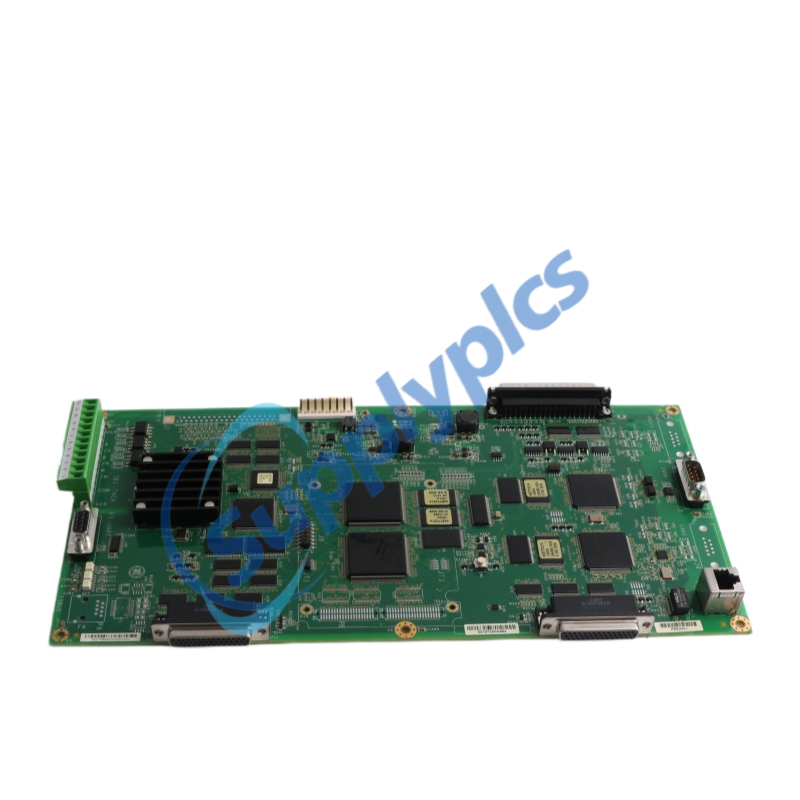
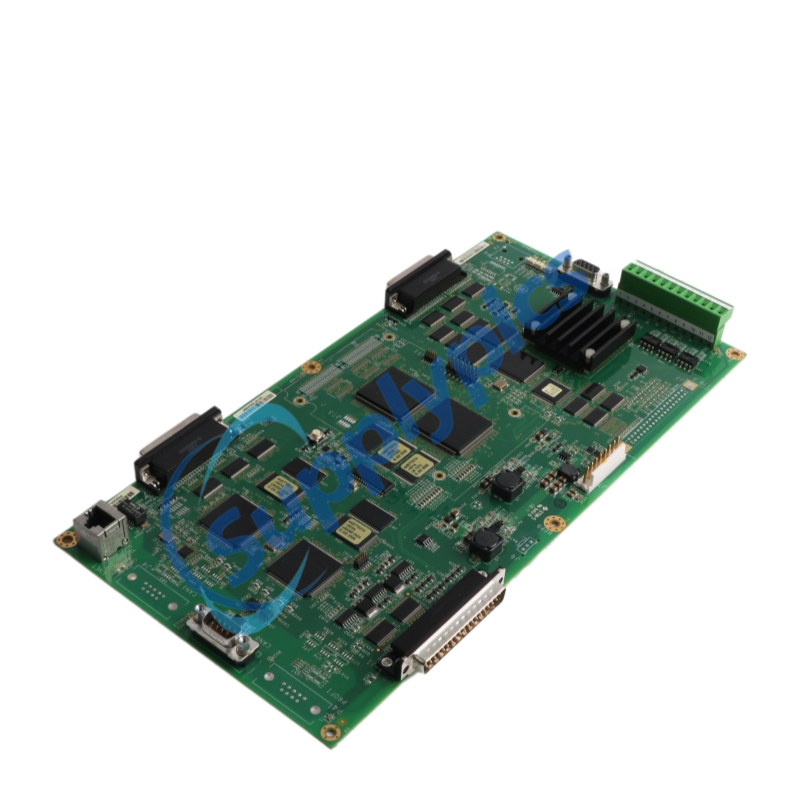
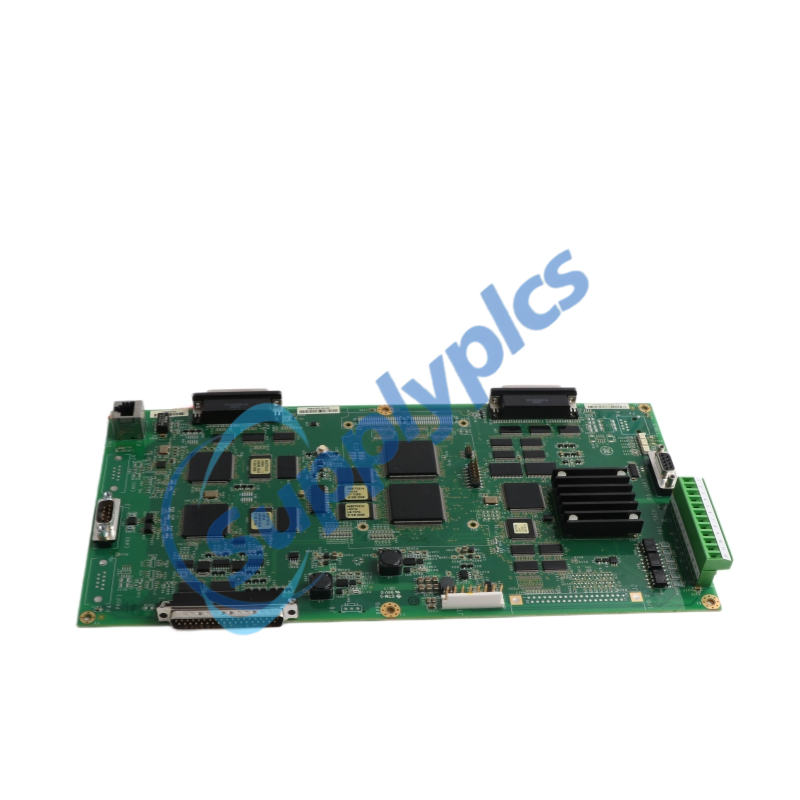
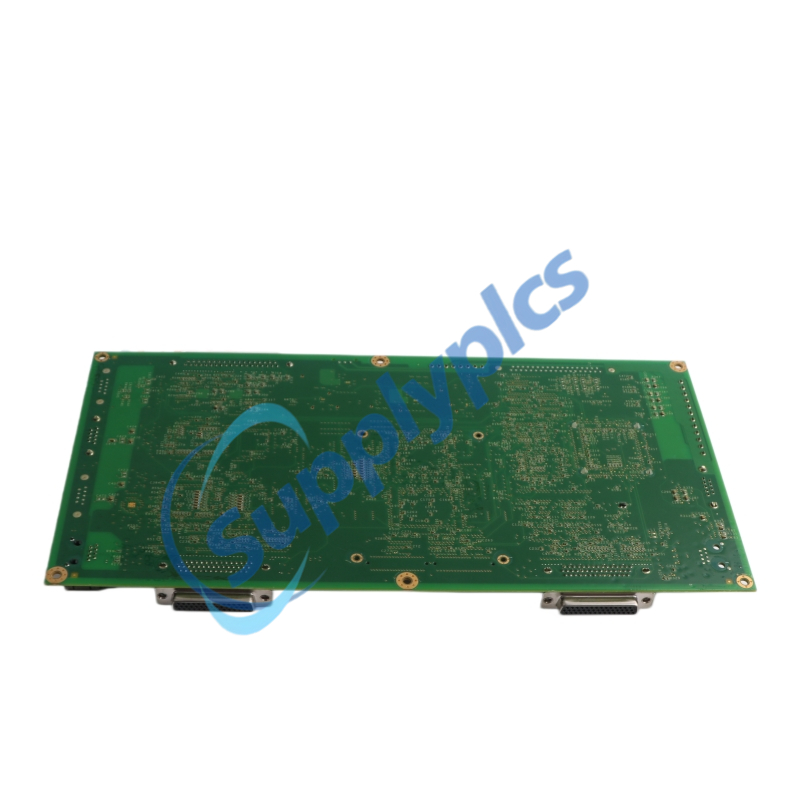
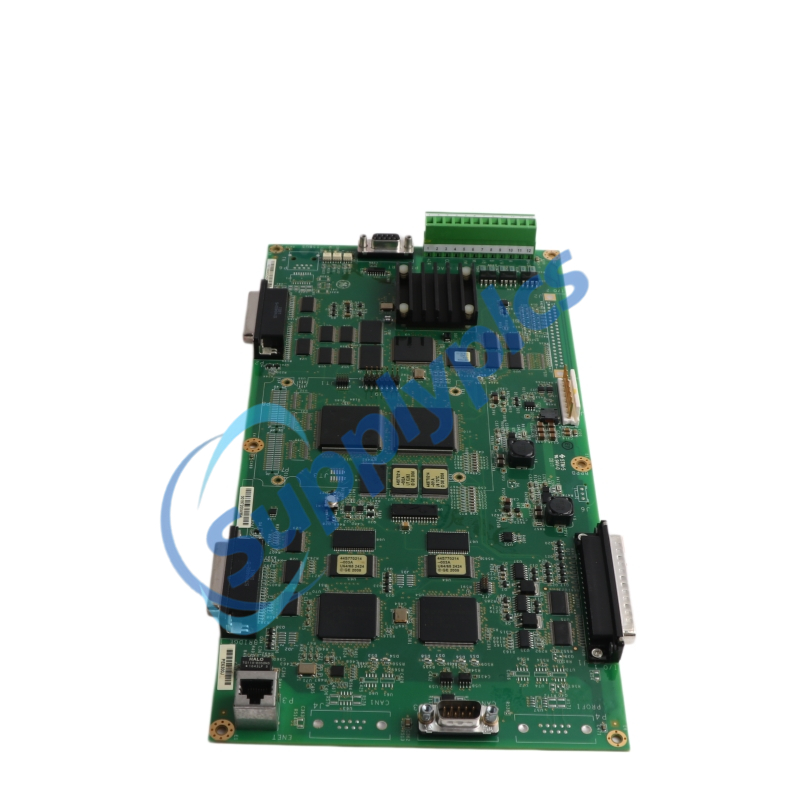
Product Name: Multi-Application Converter Control Board
Brand Name: GE
Model Number:IS210MACCH2A/IS210MACCH2AKH
Country of Origin:USA
Warranty: 12 Months
Whatsapp:+86 18159889985
Email:[email protected]
Brand Name: |
General Electric |
Model Number: |
IS210MACCH2A/IS210MACCH2AKH |
Country of Origin: |
USA |
Packaging Details: |
Original new Factory Sealed |
Delivery Time: |
Delivery time in stock |
Payment Terms: |
T/T |
|
Sales Manager: |
Stella |
|
Send an email: |
|
|
Contact in Whatsapp: |
|
Parameter |
Specification |
|
Part Number |
IS210MACCH2A |
|
Alternate P/N |
IS210MACCH2AKH / IS210MACCH2AEG |
|
Manufacturer |
GE Vernova (formerly GE Digital / GE Grid Solutions) |
|
Product Category |
Multi-Application Converter Control Board / MACC (Main Automation Controller Core) |
|
Series |
Mark VIe / Mark VIeS Speedtronic |
|
Hardware Architecture |
Dual-core lockstep ARM Cortex-A9 processor |
|
Core Clock Speed |
1.0 to 1.6 GHz |
|
System Memory |
256 MB DDR3-1600 with ECC |
|
Mass Storage |
128 GB (flash-based) |
|
Analog Channels |
32 differential channels, configurable |
|
Analog Input Ranges |
4–20 mA, ±10 V, TC, RTD, speed pulse, vibration |
|
Analog Output Channels |
8 (4–20 mA / 0–10 V, 16-bit DAC) |
|
A/D & D/A Resolution |
16-bit, SNR 93 dB |
|
Sampling Rate |
1 kHz per channel, all channels simultaneous |
|
Sample Synchronization |
<5 μs between channels |
|
Digital I/O |
8 DC inputs + 4 DC outputs (24 V) |
|
Communication Ports |
2× RJ45 100Base-TX (redundant EtherCAT/IP) + 1× RS-485 (Modbus-RTU) |
|
Fieldbus Protocols |
Modbus TCP/RTU, Profibus DP (via gateway), Ethernet/IP |
|
Safety Classification |
SIL 2 & SIL 3 capable (IEC 61508) |
|
Operating System |
QNX Neutrino RTOS (hard real-time) |
|
Power Supply Input |
24 V DC (nominal); wide range 18–32 V DC |
|
Typical Power Draw |
≈8 W |
|
Operating Temperature |
–40°C to +70°C (storage –40°C to +85°C) |
|
Mounting Types |
Rack-mount via Mark VIe I/O chassis (IS200CHS012 / IS220CHS012) or DIN rail |
|
Physical Dimensions |
33.3x17.5x2.5cm |
|
Weight |
0.42kg |
|
Redundancy Modes |
Simplex, duplex, Triple Modular Redundancy (TMR) |
|
MTBF |
414,248 hours |
|
Country of Origin |
United States (USA) |
|
Certifications |
CE, UL 508, ATEX Zone 2, IECEx, SIL 2 / SIL 3 (IEC 61508) |
Engineered for the Mark VIe control ecosystem, IS210MACCH2A functions as a multi‑application converter controller (MACC) that integrates high‑speed I/O conditioning, real‑time processing, and deterministic network communication. The IS210MACCH2A serves as a central execution node in turbine control architectures, operating under the QNX Neutrino RTOS for predictable task scheduling. With 32 differential analog channels and eight 16‑bit analog outputs, the IS210MACCH2A simultaneously monitors speed, temperature, vibration, and servo valve signals while executing GE‑embedded turbine algorithms. The IS210MACCH2A supports dual‑core lockstep processing with ECC memory and hardware redundancy, making it a comprehensive solution for demanding power generation and industrial automation applications.
Gas turbine control – speed regulation, temperature monitoring, vibration analysis, and fuel valve modulation
Steam turbine supervision and protection
Combined‑cycle power plant control
Industrial process automation requiring high‑speed multi‑axis coordination and closed‑loop analog control
Motor control centers with variable frequency drive (VFD) interfacing (25–75 kW range)
Compressor station automation and pump control systems
Turbine retrofit projects requiring replacement of legacy analog controllers
Dual‑core Lockstep Processing – ARM Cortex‑A9 configuration where both processor cores execute identical instruction streams in parallel; any divergence triggers fault detection, achieving >99.999% system availability
32 High‑Density Analog Input Channels – Configurable for 4–20 mA, ±10 V, thermocouple, RTD, speed pulse, or vibration input; 16‑bit resolution with <5 μs synchronization across all channels
Integrated Turbine Algorithm Library – Pre‑programmed with GE combustion turbine acceleration envelopes, servo valve linearization curves, and gas path modeling logic – eliminating user programming for standard turbine functions
QNX Neutrino Real‑Time Operating System – Hard‑real‑time OS (RTOS) with deterministic task scheduling and memory‑protected process separation; critical for sub‑millisecond control loop execution in protection and emergency trip functions
Triple Modular Redundancy Support – Configurable for simplex, duplex, or full TMR (3‑unit voting) operation, meeting SIL 2 / SIL 3 safety integrity levels per IEC 61508
Embedded EtherCAT/IP Ring Redundancy – Dual Ethernet ports supporting self‑healing ring topologies with <20 ms failover recovery time, eliminating the need for external analog amplifiers and reducing cabinet wiring by up to 35%
16‑Bit Analog Outputs with Independent Diagnostics – Eight analog channels delivering 4–20 mA or 0–10 V with > ±0.15% long‑term stability; each channel includes real‑time monitoring for open circuit, short circuit, and over‑range conditions
Hot‑Swap Capability – Allows module replacement while the control system remains operational; does not require system power cycling for maintenance
Channel‑to‑Channel Electrical Isolation – 1 kV isolation between input channels and 500 V AC (1 min) between outputs and internal logic
On‑board ECC Memory (DDR3 with Error Correction) – Single‑bit errors are automatically corrected, multi‑bit errors trigger fault reporting – no silent data corruption
Executes real‑time turbine control logic including speed control loop regulation (2 Hz–20 kHz), exhaust temperature monitoring, combustion dynamics processing, and fuel valve servo positioning
Converts field instrumentation inputs (4‑20 mA, ±10 V, thermocouple, RTD, magnetic pickup, accelerometer) into digital control data for the Mark VIe controller with <5 μs inter‑channel synchronization
Generates 4‑20 mA or 0‑10 V analog output signals to drive I/P converters, electro‑hydraulic actuators, and positioning valves with 16‑bit resolution and < ±0.1% typical accuracy at 25°C
Sends inter‑controller messages via redundant EtherCAT/IP ring network; automatically reroutes data when a link or switch fails with recovery under 20 ms
Determines voted output states in Triple Modular Redundant configurations: when all three units are online, majority rules (2‑out‑of‑3) – when one unit is offline, the remaining two provide duplex voting
Reports comprehensive diagnostics including individual channel health, internal power supply status (+15 V / –15 V rails for analog circuits), on‑board temperature, Ethernet link integrity, and backplane communication status through ControlST/ToolboxST
Automatically loads GE‑preset turbine tuning parameters, acceleration envelopes, servo valve compensation curves, and gas path algorithm coefficients on power‑up – user‑friendly, no manual programming
Q1: What does the IS210MACCH2A module do in a Mark VIe control system?
A1: The IS210MACCH2A is a multi‑application converter controller (MACC) that handles turbine speed sensing, temperature monitoring, vibration analysis, and servo valve actuation – all within a single 6U module running the QNX Neutrino RTOS.
Q2: How many analog input channels does the IS210MACCH2A support?
A2: The IS210MACCH2A supports 32 differential analog input channels, configurable for 4‑20 mA, ±10 V, thermocouple (TC), RTD, magnetic speed pickup, or vibration input with 1 kHz sampling rate per channel.
Q3: Is the IS210MACCH2A compatible with TMR (Triple Modular Redundancy) configurations?
A3: Yes, the IS210MACCH2A supports simplex, duplex, and full TMR modes with 2‑out‑of‑3 output voting, meeting SIL 2 / SIL 3 safety integrity levels under IEC 61508.
Q4: Does the IS210MACCH2A require external cooling?
A4: The IS210MACCH2A relies on convection cooling from the Mark VIe chassis; it operates from –40°C to +70°C with no integrated fan. However, follow thermal derating guidelines when using all channels simultaneously.
Q5: Can the IS210MACCH2A be replaced without powering down the Mark VIe system?
A5: Yes, the IS210MACCH2A supports hot‑swap (live insertion and removal). This allows module exchange while the rest of the control system continues to run normally.
Inguiry Now: [email protected]
 EN
EN