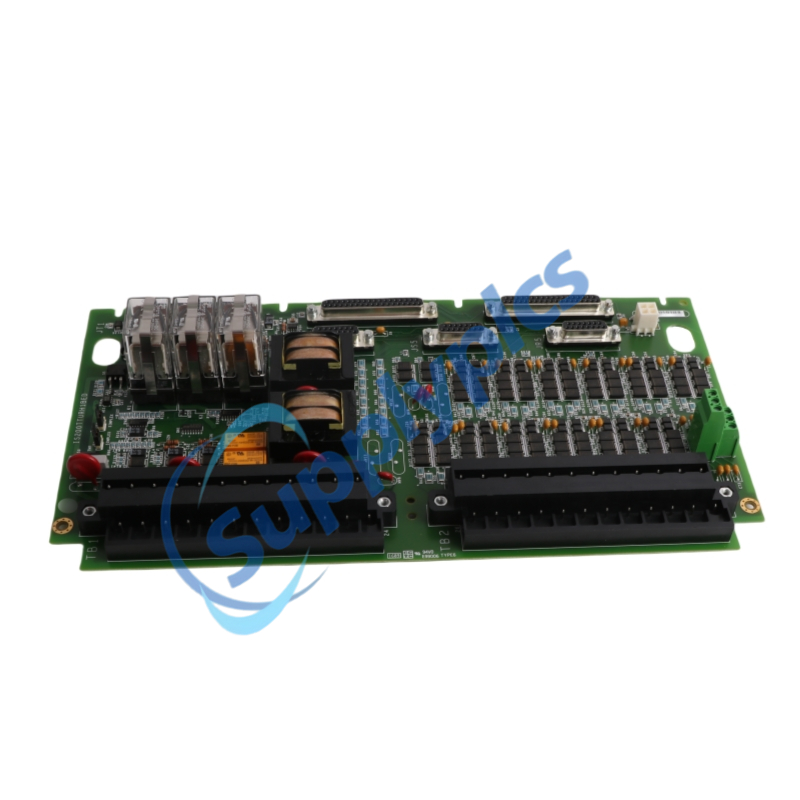
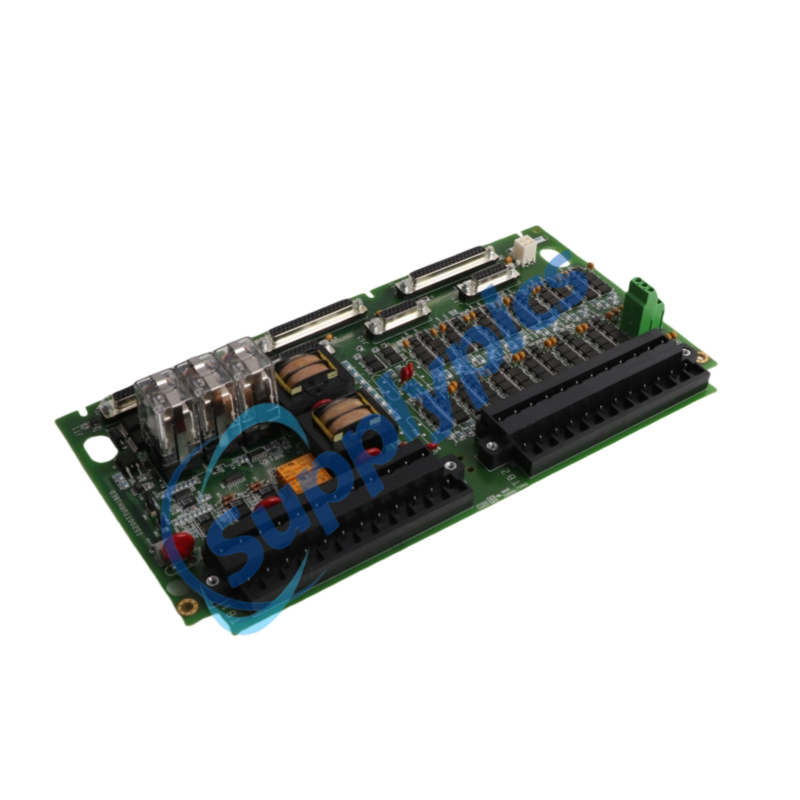
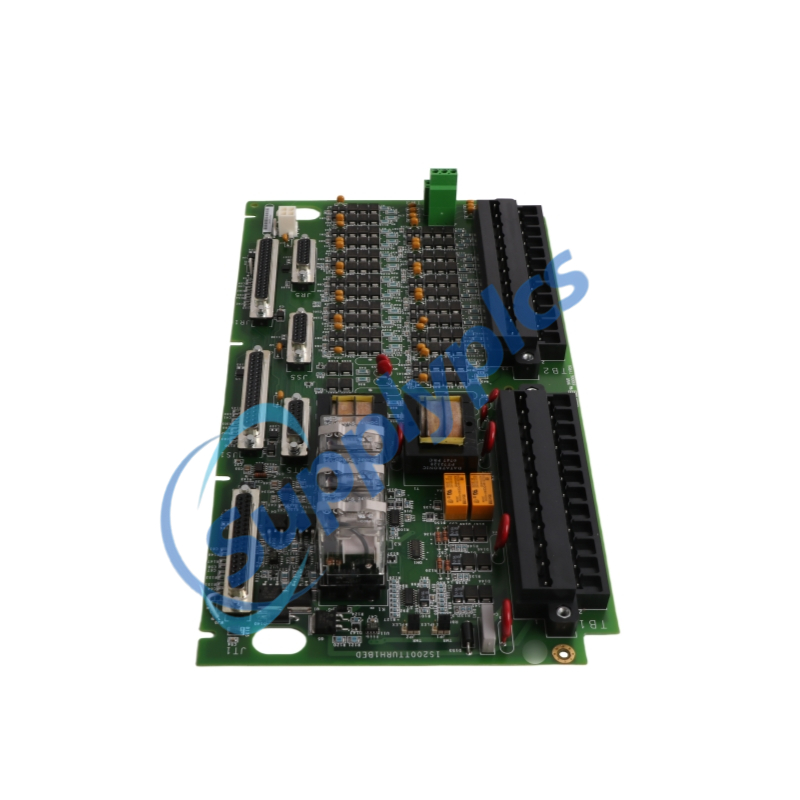
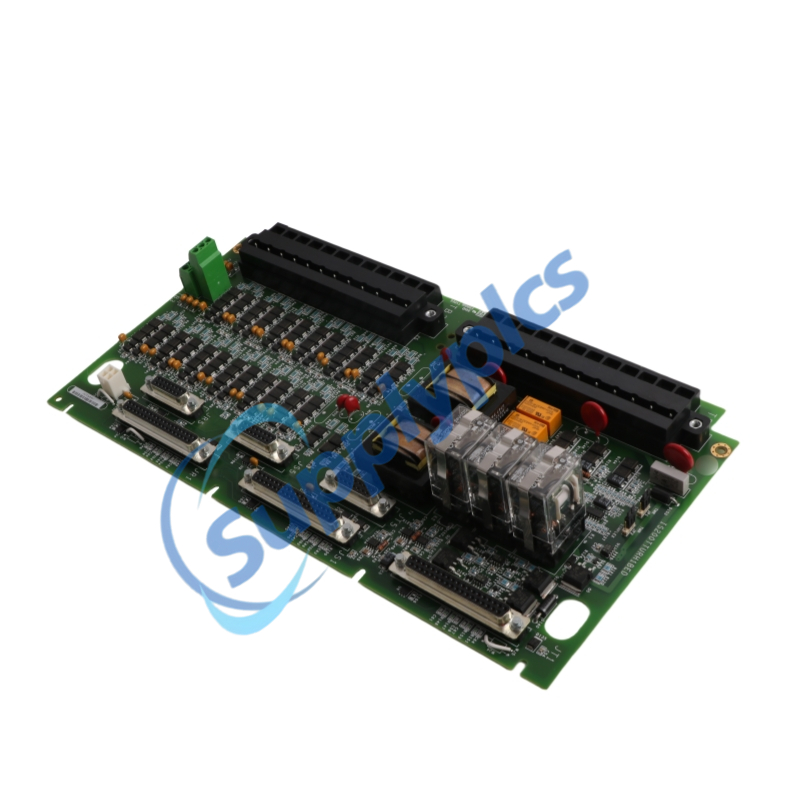
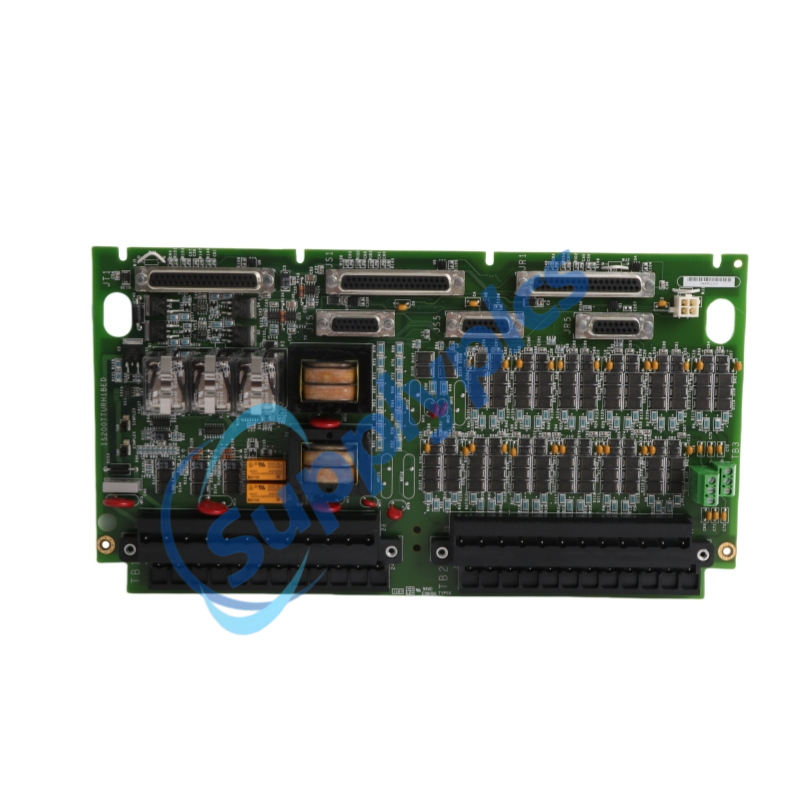
Product Name: PROTECTION INPUT TURBINE TERMINAL BOARD
Brand Name: GE
Model Number:IS200TTURH1BED
Country of Origin:USA
Warranty: 12 Months
Whatsapp:+86 18159889985
Email:[email protected]
Brand Name: |
General Electric |
Model Number: |
IS200TTURH1BED |
Country of Origin: |
USA |
Packaging Details: |
Original new Factory Sealed |
Delivery Time: |
Delivery time in stock |
Payment Terms: |
T/T |
|
Sales Manager: |
Stella |
|
Send an email: |
|
|
Contact in Whatsapp: |
|
Part Number |
IS200TTURH1BED |
|
Functional Acronym |
TTUR (Turbine Terminal Board) |
|
Manufacturer |
General Electric (GE) |
|
Series |
Mark VI / Speedtronic Mark VI |
|
Product Type |
Protection Input Turbine Terminal Board |
|
Group |
H1 |
|
Board Assembly |
Standard PCBA |
|
Technology |
Surface mount |
|
Temperature Operating |
–30°C to +65°C |
|
Technology |
Surface mount |
|
Size |
33x17.7x5.5cm |
|
Weight |
0.82kg |
|
Country of Manufacture |
United States (USA) |
|
Availability |
In Stock |
|
Manual |
GEH-6421M |
The IS200TTURH1BED is a protection input turbine terminal board (TTUR) engineered by GE for the Mark VI Speedtronic control platform. The IS200TTURH1BED interfaces directly with the turbine I/O processor and VTUR board, managing critical field signals such as speed pulses, generator and bus voltages, shaft sensors, and main breaker control. The IS200TTURH1BED terminates twelve passive pulse rate inputs for precise rotational speed measurement, provides 125 V DC output for automatic generator synchronizing, and accepts shaft voltage/current inputs for operational health assessment. With three dedicated relays (K25/K25P/K25A) controlling main breaker power and jumper‑selectable simplex/TMR modes, the IS200TTURH1BED serves as a compact, high‑integrity signal termination solution for demanding gas and steam turbine environments.
Gas turbine primary protection and speed monitoring in Mark VI systems
Steam turbine overspeed protection and synchronization control
Automatic generator synchronizing with 125 V DC main breaker coil output
Shaft voltage and current monitoring for turbine operational health assessment
Simplex applications with JR5 + JR1 connectors for basic turbine control
TMR (Triple Modular Redundant) systems with six connectors (JR5, JR1, JS5, JS1, JT5, JT1)
Power generation facilities requiring high‑integrity protection input termination
12 passive pulse rate inputs: Accepts signals from toothed wheel speed sensors for precise rotational speed measurement without external power.
125 V DC main breaker coil output: Directly drives generator main breaker (52G) for automatic synchronizing, ensuring seamless grid alignment.
Generator and bus voltage conditioning: Handles low‑level signals from potential transformers for accurate voltage monitoring.
Shaft voltage and current inputs: Monitors induced shaft electrical parameters to assess turbine operational health.
Three main breakers relays (K25, K25P, K25A): All three must close to supply 125 V DC power to the main breaker – hardware interlock enhances protection integrity.
Jumper‑configurable redundancy (JP1/JP2): Selects between SMX (simplex) and TMR (triple modular redundant) operation for relay drivers K25 and K25P.
Dual terminal blocks (TB1/TB2): Each block accommodates up to 12 AWG wires with 24 terminals per block; adjacent shield termination strips ground cable shields directly to chassis.
Optional TTL speed pickup interface (TB3): Integrates active speed sensors with external power supply for enhanced measurement flexibility.
Surface‑mount construction with conformal coating: Withstands vibration, temperature extremes (–30°C to +65°C), and moisture in industrial turbine enclosures.
Simplex and TMR connector support: JR5 transmits speed data to VTUR; JR1 carries voltage and shaft signals. TMR systems add JS5, JS1, JT5, JT1 for three‑rack redundancy.
Component‑dense design: Includes multiple relays, transformers, variable resistors, integrated circuits, capacitors, D‑shell connectors, and jumper switches for comprehensive signal processing.
Direct VTUR interface: Works in conjunction with VTUR processor and PTUR boards for coordinated turbine control and generator synchronization.
Terminates and conditions twelve passive pulse rate inputs from magnetic speed pickups, converting raw pulse signals into usable speed data for the VTUR processor and overspeed protection logic.
Conditions generator and bus voltage signals from potential transformers, routing them through JR1 to the I/O processor for synchronizing and protection decisions.
Provides a 125 V DC output to the main breaker coil (52G) for automatic generator synchronizing when all three relays (K25, K25P, K25A) are closed.
Acquires shaft voltage and current measurements and sends this diagnostic data to the control system for turbine health assessment.
Routes conditioned speed data from the TTUR to the VTUR processor via the JR5 connector, enabling accurate real‑time speed monitoring.
Distributes input signals across six connectors (JR5, JR1, JS5, JS1, JT5, JT1) in TMR configurations, feeding the same protection inputs to three independent control racks for fault‑tolerant operation.
Configures relay driver redundancy mode through jumpers JP1 and JP2, selecting either simplex or TMR operation for K25 and K25P relay drivers.
Provides optional TTL interface through TB3 for active speed pickups requiring external power supply, expanding sensor compatibility.
Facilitates field wiring termination through TB1 and TB2 with up to 12 AWG conductors and integral shield grounding strips for noise reduction.
Electrically isolates input circuits and protects downstream electronics from field transients via conformal coating and robust component selection.
Q1: What is the IS200TTURH1BED used for?
A1: The IS200TTURH1BED is a protection input turbine terminal board (TTUR) that terminates speed, voltage, shaft and breaker signals between field sensors and the VTUR processor in GE Mark VI turbine control systems.
Q2: How many passive pulse rate devices can the IS200TTURH1BED connect to?
A2: The IS200TTURH1BED connects to up to twelve passive pulse rate sensors (magnetic pickups) that measure turbine rotational speed using a toothed wheel.
Q3: What output does the IS200TTURH1BED provide for automatic synchronizing?
A3: The IS200TTURH1BED supplies 125 V DC output to the main breaker coil (52G) for automatic generator synchronizing when relays K25, K25P and K25A are all closed.
Q4: How does the IS200TTURH1BED support both simplex and TMR systems?
A4: In simplex mode, the IS200TTURH1BED uses JR5 and JR1 connectors. In TMR mode it uses all six connectors (JR5, JR1, JS5, JS1, JT5, JT1) to distribute signals across three independent control racks for fault‑tolerant operation.
Q5: What are the functions of relays K25, K25P and K25A?
A5: Relays K25, K25P and K25A on the IS200TTURH1BED must all close to provide 125 V DC power to the main breaker – forming a hardware interlock that ensures main breaker energisation only when all three protection relays are engaged.
Inguiry Now: [email protected]
 EN
EN